Karwa Chauth Mehndi Designs: Elegant Ideas for a Special Celebration
Looking for Karwa Chauth mehndi that feels festive without being difficult to wear? This guide covers simple, bridal, front-hand, back-hand and personalized designs, plus practical tips for choosing coverage, pairing mehndi with jewellery and getting better photos.
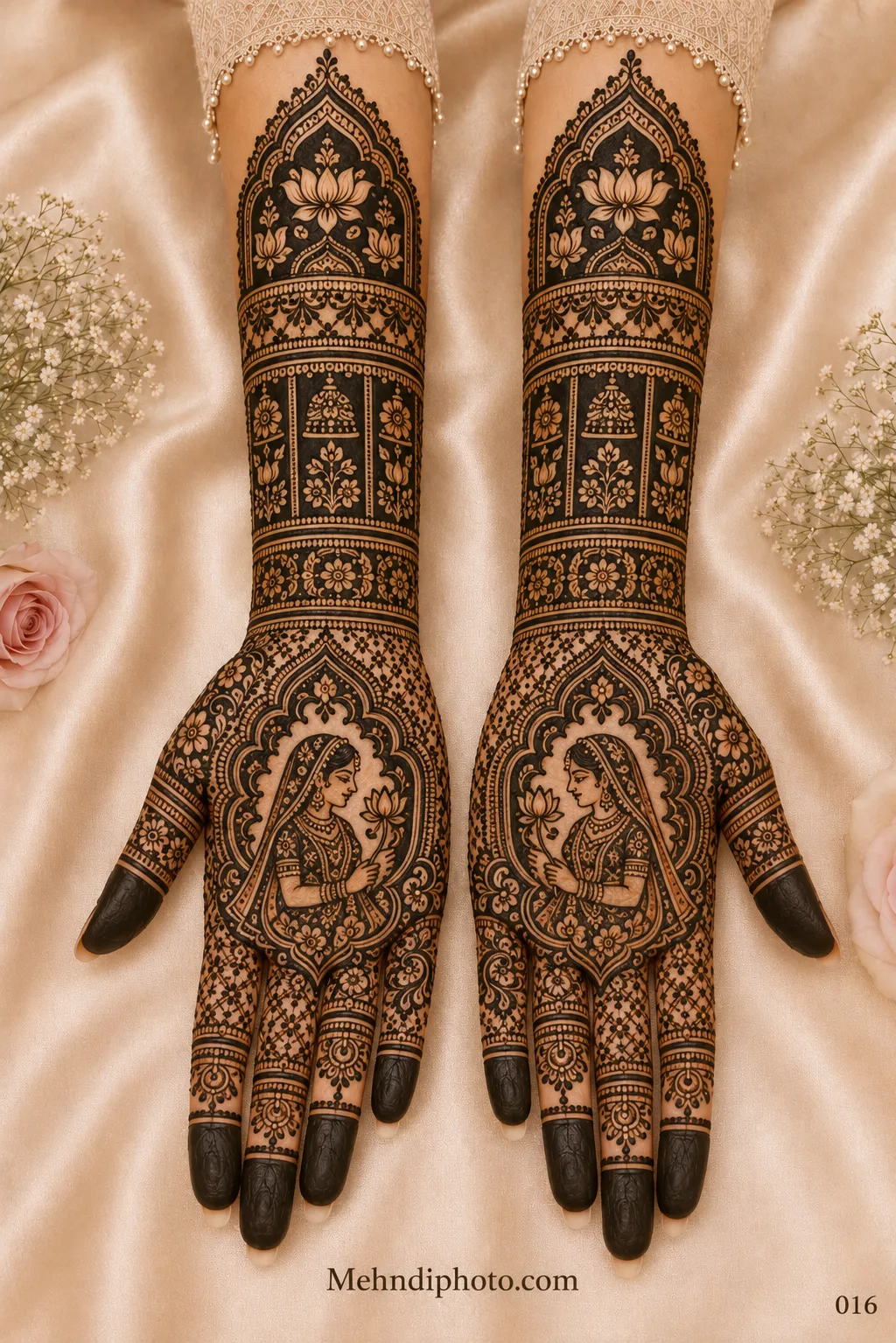
Karwa Chauth mehndi is one of those details that can instantly make the celebration feel more special. Some women prefer a full traditional design that reaches past the wrist, while others want a lighter pattern that works comfortably through the day and still looks beautiful with bangles, rings and festive clothes.
There is no single “correct” Karwa Chauth design. The best choice depends on your outfit, the time you have, whether you are applying mehndi yourself or booking an artist, and how much detail you actually enjoy wearing. A clean floral trail can look just as polished as a dense full-hand pattern when the placement is planned well.
This guide brings together practical ideas for Karwa Chauth mehndi designs, including front-hand, back-hand, simple, traditional and personalized styles.
What makes a mehndi design work well for Karwa Chauth?
Karwa Chauth styling usually includes several visual elements at once: bangles, rings, nail colour, embroidered sleeves, sarees or suits, and sometimes statement jewellery. Mehndi should support that look rather than compete with every accessory.
A useful way to choose is to decide your coverage first. Do you want the palms to be the focus? Do you prefer the back of the hand because it appears in more photographs? Or do you want a balanced design on both sides?
Once the coverage is clear, choosing motifs becomes much easier.
Simple Karwa Chauth mehndi designs
Simple mehndi is a good choice when you have limited time or prefer a lighter look. It also works well when your outfit and jewellery are already detailed.
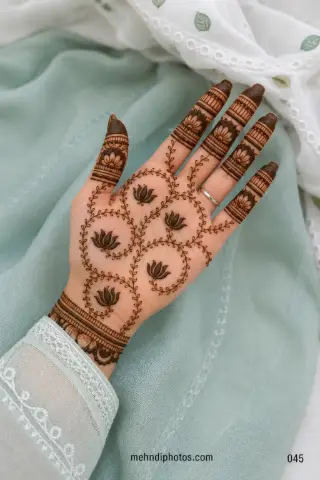
Beginner-friendly ideas include a central mandala, a diagonal floral vine, a bracelet-style wrist pattern, a small paisley composition or a few decorated fingers with open space across the palm.
The design does not need to fill every gap. In fact, open skin often makes the darker henna lines stand out more clearly.
Quick design structure
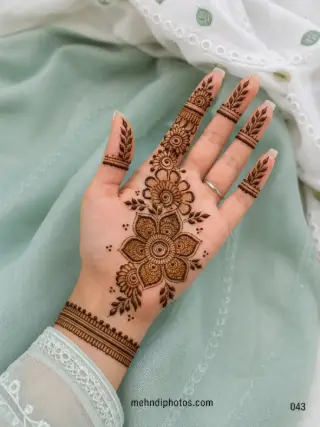
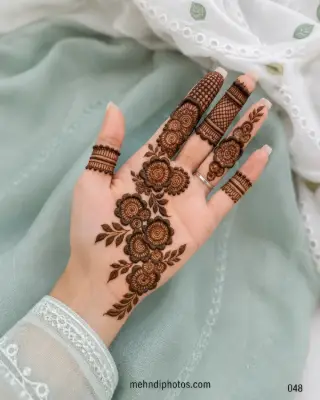
A reliable quick structure is one medium flower near the lower palm, a leafy vine moving toward the index finger, and a small wrist border. It gives the hand a clear visual direction without requiring precise symmetry.
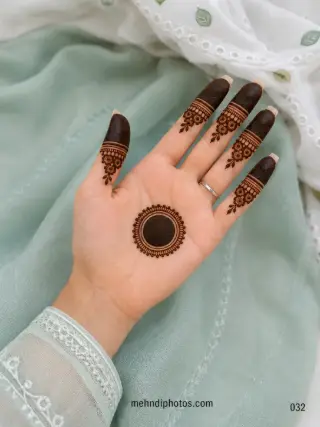
If you want something even faster, decorate two fingers and add a small round tikki in the centre of the palm. The Gol Tikki Mehndi collection is useful for this kind of traditional minimal look.
Front hand Karwa Chauth mehndi
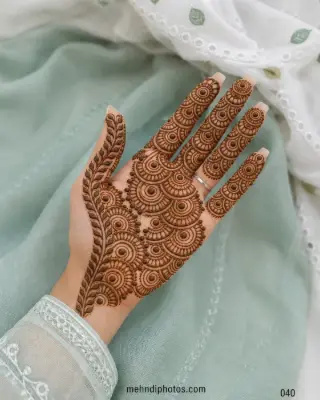
The palm is ideal for traditional motifs because it provides a broad, flat area. Round mandalas, paisleys, florals and jaali sections all work well here.
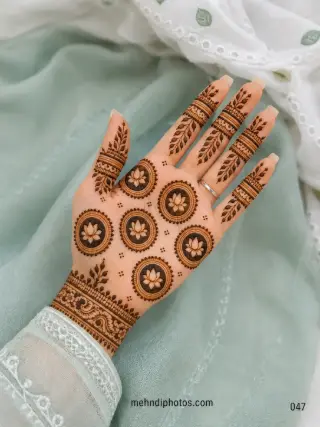
For a medium-coverage design, keep one larger focal motif in the centre and use smaller details around it. This usually looks more balanced than filling the entire palm with motifs of the same size.
If you prefer a fuller design, let the pattern continue gradually toward the wrist and forearm rather than ending abruptly at the base of the palm.
Browse front hand mehndi designs for different ways to manage palm coverage and finger spacing.
Back hand Karwa Chauth mehndi
The back of the hand is often visible while holding a thali, adjusting bangles or posing for close-up photographs, so it deserves as much thought as the palm.
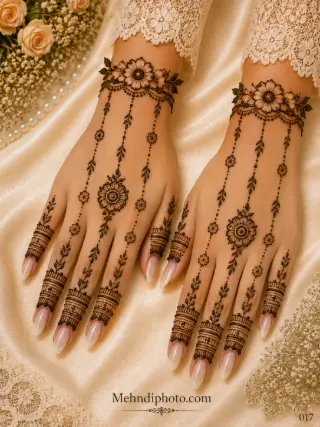
Jewellery-style patterns are especially effective here. A wrist cuff connected to one finger, a floral chain across the centre of the hand or matching finger bands can create a detailed look while leaving enough open skin for rings to stand out.
If you plan to wear a large ring, avoid placing the strongest motif directly underneath it. Leaving a little negative space around the ring usually makes both the jewellery and mehndi easier to see.
See the back hand mehndi gallery for placement ideas.
Traditional Karwa Chauth mehndi motifs
Traditional designs often combine several familiar elements rather than relying on one motif.
Mandala or gol tikki
A round central tikki feels classic and remains one of the easiest designs to adapt. It can stay small and minimal or expand into multiple floral and dot borders.
Paisleys
Paisleys add movement and work well along the sides of the palm or wrist. One large paisley is often more readable than many tiny ones.
Flowers and leaves
Floral patterns are versatile and easy to connect to other motifs. A flower can become the centre of a palm design, the start of a wrist band or part of a diagonal trail.
Jaali work
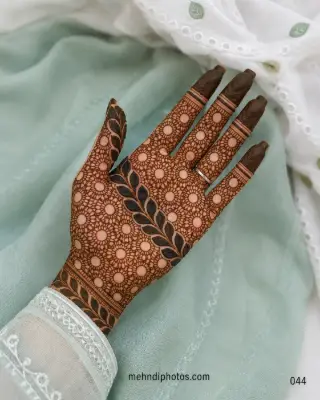
Fine net patterns can make a design feel richer, but they need steady spacing. If you are applying mehndi yourself, use jaali in one small section rather than across the entire hand.
Personalized Karwa Chauth mehndi ideas
A personalized design does not have to include a complicated portrait. Small details can make the mehndi feel personal without overwhelming the hand.
Popular options include initials, a meaningful date, a tiny heart worked into a vine, a small couple-inspired motif or a symbol hidden inside the pattern.
If you add initials, place them where they remain visible after the stain darkens. Very tiny lettering can blur into surrounding details.
How much coverage should you choose?
Think about application time, comfort and your outfit.
- Minimal coverage: fingers, one palm motif or a small back-hand trail.
- Medium coverage: palm plus wrist or back hand plus finger bands.
- Full coverage: detailed palms, fingers, wrists and part of the forearm.
If you have a busy day before the celebration, medium coverage is often the most practical balance. It still feels festive but takes less time to apply and dry than a bridal-style composition.
Matching mehndi with bangles and jewellery
Karwa Chauth styling often includes stacked bangles, so wrist placement matters. If your bangles are wide or numerous, you do not need to spend time creating an elaborate wrist cuff that will remain hidden.
Instead, concentrate detail on the palm and visible section just above the bangles. If you are wearing fewer bangles, a bracelet-style mehndi border can become part of the overall jewellery look.
For rings, leave breathing space around statement pieces. Finger bands placed slightly above or below a ring often look cleaner than a dense pattern underneath it.
Karwa Chauth mehndi for short fingers
If your fingers are short, avoid dividing each one into too many small horizontal bands. Several strong divisions can make the fingers appear visually shorter.
Instead, try a slim vertical vine, a diagonal leaf trail or one decorative section near the base with lighter detail toward the tip.
For longer fingers, multiple bands and more intricate sections can work well because there is more room between the joints.
Should both hands match?
Exact mirror symmetry is not necessary. Coordinated hands often look more natural.
You might use the same floral language on both hands but place the main motif differently. Another approach is to keep one hand slightly fuller and the other lighter, especially if one hand will be used more during the day.
If you prefer a very traditional look, matching central mandalas with similar finger details create strong symmetry without requiring every small line to be identical.
How to choose a design when you are applying it yourself
Choose a reference based on the technique you can already control, not only on how simple the photograph looks.
A very clean geometric design may require more precision than a fuller floral vine. If straight lines and symmetry are difficult for you, choose curves, leaves and paisleys because slight variation looks natural in those motifs.
The simple mehndi collection can help if you want practical patterns with more open space.
Common mistakes to avoid
Choosing too much detail for the time available
Rushing fine work usually shows in the final design. Reduce the number of motifs and finish a smaller design cleanly instead.
Ignoring the wrist and sleeve line
Check where your sleeve ends. A detailed forearm section hidden under fabric adds application time without contributing much to the final look.
Making every finger identical
Identical finger work highlights tiny inconsistencies. Coordinated but different finger patterns are easier and often look more modern.
Filling all negative space
Open space helps motifs remain readable. Stop once the composition feels balanced.
How to get a deeper-looking stain
Stain depth depends heavily on the quality of henna and how long the paste remains on the skin. Start with clean, dry hands and avoid applying heavy lotion immediately beforehand.
- Allow the paste to dry naturally.
- Keep it on for several hours when practical.
- Avoid scrubbing the fresh stain.
- Remember that the colour usually continues developing after the paste is removed.
Freshly removed henna can look orange at first. A deeper brown or maroon tone generally develops later.
Photo-friendly Karwa Chauth mehndi
For photographs, one or two clear focal motifs usually read better than extremely fine detail everywhere. If you know you want close-up photos with a thali, bangles or rings, plan the strongest design areas around what will be visible in those poses.
Back-hand designs work especially well with bangles and rings, while palm mandalas create strong traditional close-ups.
Karwa Chauth mehndi ideas by style
- Traditional: mandala, paisleys, florals and filled fingertips.
- Modern: open florals, geometric bands and negative space.
- Arabic-inspired: bold flowers, leafy trails and diagonal flow.
- Jewellery style: wrist cuffs, chains and finger-ring patterns.
- Minimal: a small tikki, one vine or selected fingers only.
If you like open, flowing patterns, the Arabic Mehndi gallery is a useful source of inspiration.
Frequently asked questions
Which mehndi design is best for Karwa Chauth?
The best design is the one that matches your available time, outfit and preferred coverage. Mandalas, floral trails, paisleys and jewellery-style back-hand patterns are all popular choices.
Can I use a simple mehndi design for Karwa Chauth?
Yes. A clean simple design can look very festive, especially when paired with bangles, rings and traditional clothing.
Is front hand or back hand mehndi better?
Neither is automatically better. Palm designs suit traditional motifs, while back-hand patterns often show more clearly with rings and bangles in photographs.
Can initials be added to Karwa Chauth mehndi?
Yes. Initials or a tiny personalized symbol can be incorporated into florals, paisleys or wrist sections without making the design overly dense.
Final thoughts
Karwa Chauth mehndi does not need to be the most complicated design you have ever worn. What matters is that the placement feels intentional, the lines remain readable and the pattern works with your jewellery and outfit.
Choose your coverage before choosing tiny details, leave enough open space for the main motifs to stand out, and adapt any reference to your own hand rather than trying to reproduce every line exactly.
For more inspiration, browse the complete Karwa Chauth Mehndi collection on MehndiPhotos.