Back Hand Mehndi Designs: The Side Everyone Actually Sees
From minimal wrist bands to full bridal work, here is how to choose, apply and care for back hand mehndi — with style, festival and aftercare advice from real experience.
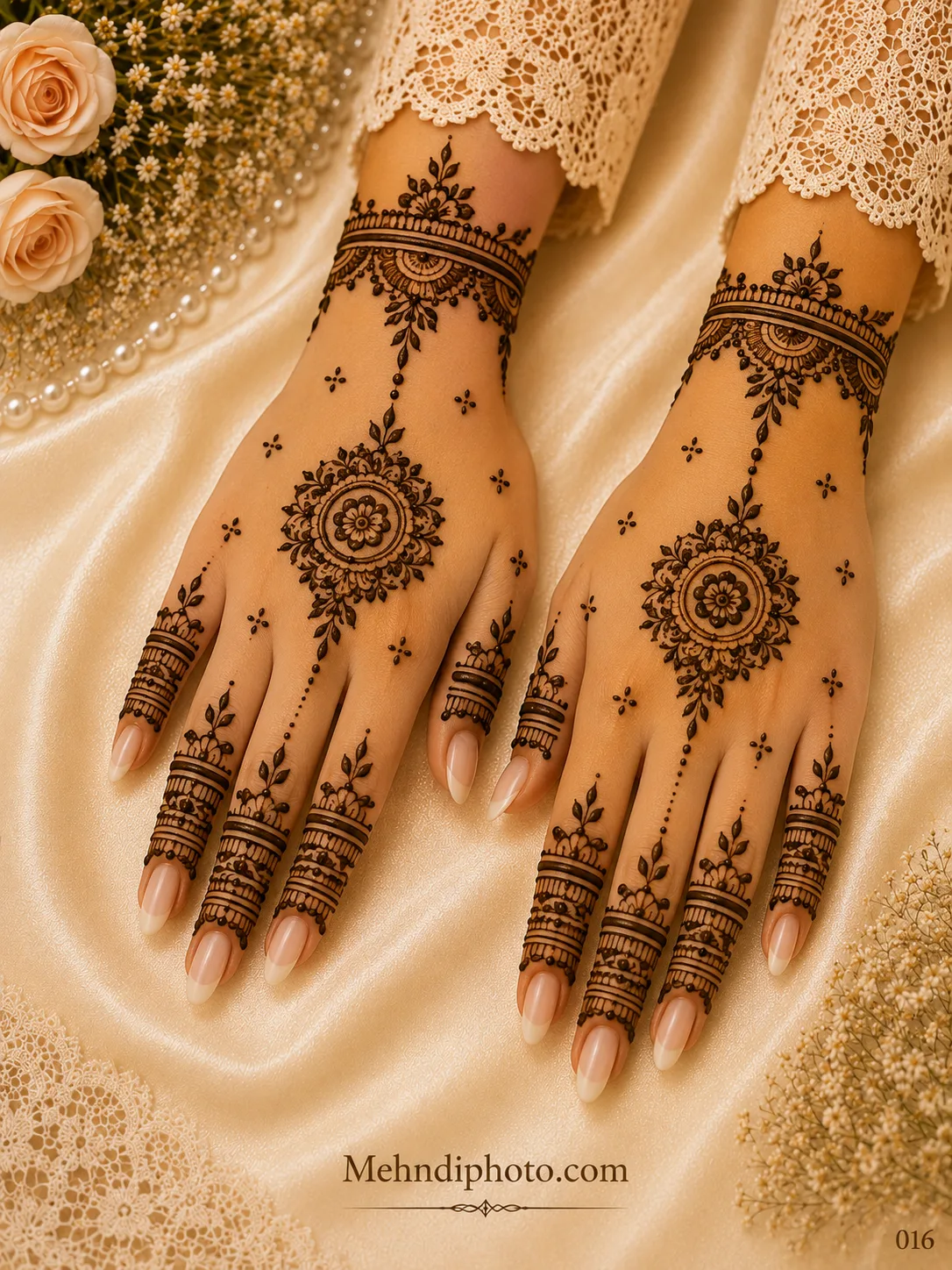
Back hand mehndi is the design everyone actually sees. When you fold your hands to greet elders, hold a puja thali, clap during a sangeet or raise your hand for a photo, it is the back of the hand that faces the world. That is exactly why so many women in India plan this side of the design first and treat the palm as the supporting act.
This guide walks through simple and bridal back hand mehndi, the difference between Indian and Arabic styles, finger and wrist patterns, festival picks, and the small habits that decide whether your colour comes out orange or deep maroon.
Why back hand mehndi feels different
The back of the hand is a flat, wide, slightly curved surface. Unlike the palm, it does not have deep creases, so lines stay crisp and shading spreads evenly. But the skin here is thinner and gets less body heat, which is why the stain on the back of the hand is usually a shade lighter than on the palm. Good artists plan for this by keeping the strokes slightly thicker and letting the paste sit longer.
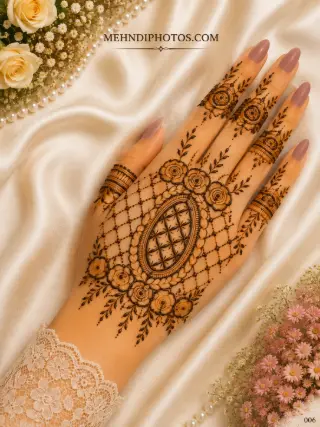
Design-wise, the back hand rewards one strong focal motif. A single mandala near the knuckles, an oval pendant in the centre, or a diagonal vine running from the wrist to the index finger reads beautifully in photographs. Too many competing motifs and the hand starts to look busy rather than elegant.
Simple back hand mehndi designs
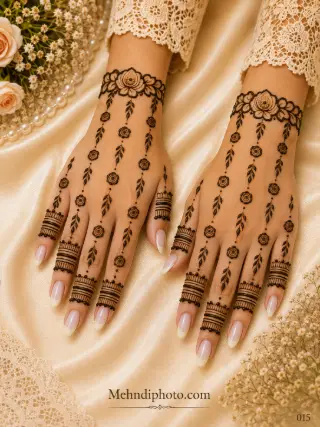
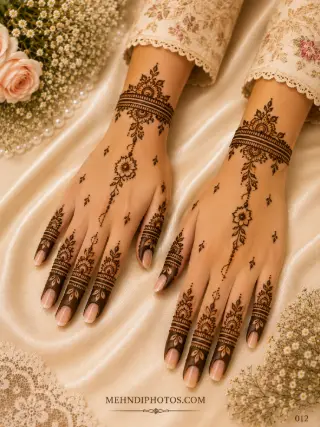
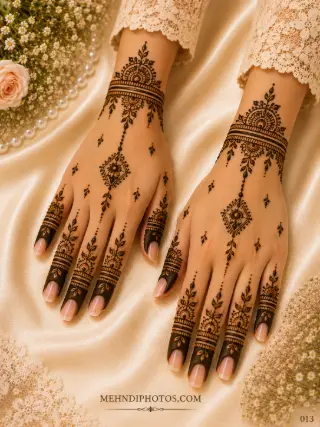
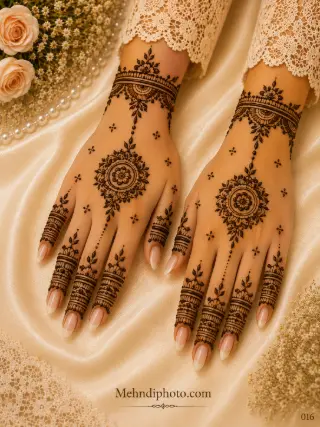
Simple does not mean plain. Most everyday back hand designs are built from four dependable blocks:
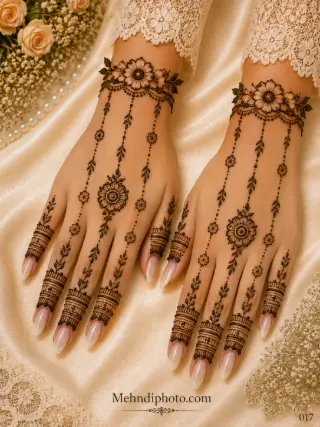
- A wrist bracelet — a band of flowers, leaves or a chain motif that anchors the design.
- A centre motif — a small mandala, oval pendant, lotus or diamond shape placed between the wrist and knuckles.
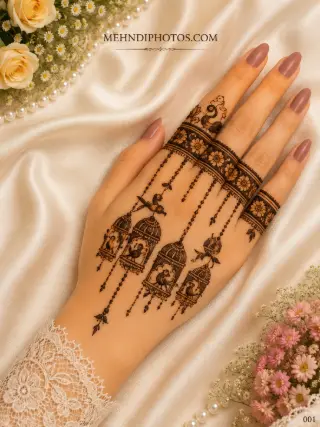
- A connecting trail — a vine or hanging chain linking the wrist band to the centre motif or to one finger.
- Finger detailing — bands, tiny leaves, or a single decorated finger with the rest kept bare.
Mix any two of these and you have a clean 15-minute design. Leaving skin empty is a deliberate choice here — negative space is what makes minimal mehndi look modern instead of unfinished. If you are practising at home, browse our easy mehndi designs for shapes that are forgiving of shaky hands.
Bridal back hand mehndi
For a bride, the back hand carries the storytelling. Traditional Rajasthani and Marwari work fills this side with a central dulha–dulhan portrait, jharokha arches, peacocks, dholak players and rows of fine jaali. North Indian brides often continue the pattern past the wrist into the forearm so the design reads as one continuous piece when the choodas are worn.
A common modern choice is contrast: heavy, dense detailing on the back hand and a lighter, more open palm. It photographs well and takes less time than filling both sides completely. Whatever style you pick, ask the artist to leave a clean finished edge near the wrist — an abrupt cut-off is the most common thing brides regret later. See our full bridal mehndi collection for reference images you can save and show your artist.
Arabic and traditional styles on the back hand
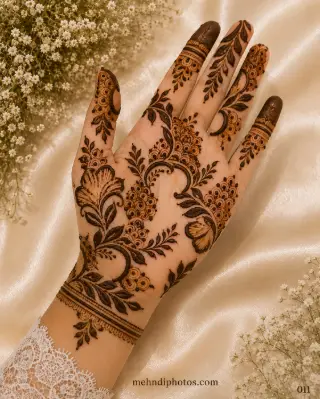
Arabic mehndi is the most popular back hand style right now, and for good reason. It uses bold, flowing floral vines that travel diagonally across the hand, thick outlines, generous shading and plenty of empty skin between motifs. It covers quickly, dries faster than dense Indian work, and looks striking even from a distance.
Traditional Indian work goes the other way — fine lines, symmetry, tightly packed jaali and checks, motifs with meaning such as the lotus for purity, the peacock for beauty and the paisley for fertility. Indo-Arabic designs sit in between: an Arabic vine structure filled with Indian detailing. Explore Arabic mehndi designs if you want maximum impact with minimum sitting time.
Finger and wrist patterns
Fingers finish a back hand design. The easiest approach is to fully decorate the index and little finger and keep the middle ones simple, or to run a ring-and-chain motif from one fingertip down to the wrist. Filled fingertips — solid henna caps on the tips — are a traditional bridal look that stains darkest and lasts longest, because fingertip skin is thick.
At the wrist, a closed bracelet band suits everyday wear, while an open cuff that continues into the forearm suits weddings. Keep the bracelet at least a finger-width below the wrist bone so bangles do not smudge the fresh paste. For dedicated finger work, see our finger mehndi designs.
Designs for festivals and occasions
Karwa Chauth: Married women traditionally choose fuller back hand work with the husband's initial hidden inside the pattern. A centre mandala with a fine jaali border is the classic choice.
Teej: Green-season motifs work best — leaves, vines, jhula (swing) motifs and peacocks. Medium coverage on the back hand with light palms is the usual balance.
Diwali: Diya, star and rangoli-inspired geometric motifs suit the festival. Since you will be handling sweets and puja items, keep the design on the back hand and leave the palm mostly free.
Eid: Chaand Raat calls for Arabic floral trails, crescent motifs and delicate finger bands. Apply the night before so the colour peaks by morning namaz.
Engagement: A single elegant motif around the ring finger, with a diagonal vine sweeping across the back hand, keeps the ring as the hero of every photo.
How to choose the right design
- Match the occasion, not the trend. A full bridal piece on a casual Diwali dinner will feel heavy; a two-motif minimal design at your own wedding will feel thin.
- Consider hand size. Slim, long hands suit vertical vines and trails. Broader hands look balanced with a round centre motif and a strong wrist band.
- Count the hours. Simple back hand work takes 15–30 minutes per hand, Arabic 45–60, full bridal 3–5 hours per hand. Book accordingly.
- Think about your outfit. Full sleeves suit hand-only designs; sleeveless or three-quarter sleeves let a wrist-to-forearm design shine.
Still deciding between sides? Compare with our front hand mehndi designs before you finalise.
Application and aftercare tips
- Wash and dry your hands before application. Skip lotions, oils and sanitiser — they block the dye.
- Use fresh, natural henna. Paste that smells strongly chemical or stains instantly is usually adulterated and can burn the skin.
- Keep the hand still and slightly warm while the paste dries. Cold hands stain poorly.
- Dab a light lemon and sugar mix once the paste is touch-dry — twice at most. Over-soaking makes the design bleed.
- Leave the paste on for 6–8 hours; overnight is ideal for bridal work.
- Scrape the dry paste off with a blunt edge. Never wash it off with water.
- Rub a little mustard oil, coconut oil or balm on the stained skin and avoid water for 12 hours.
- The colour deepens for 48 hours. Judge your mehndi on day two, not on day one.
Frequently asked questions
Why is my back hand mehndi lighter than my palm?
The skin on the back of the hand is thinner and cooler, so it absorbs less dye. Keeping the paste on longer, staying warm and applying oil after scraping all help close the gap.
How long does back hand mehndi last?
Usually 7 to 12 days. It fades faster than palm mehndi because the back of the hand is washed, rubbed and sun-exposed more often.
Can I do back hand mehndi myself?
Yes, and it is easier than the palm because the surface is flat and you can see the whole design while working. Start with a wrist band and one centre motif using your dominant hand on the other hand.
How many days before a wedding should mehndi be applied?
Two days before the main function. The stain peaks at roughly 48 hours, so applying too early means the colour has already started fading on the big day.
Do simple back hand designs suit brides?
They suit engagement, haldi and mehndi-guest looks beautifully. For the wedding day itself, most brides prefer denser work, but a minimal design with clean, confident lines can look very elegant if that is your personal style.
Final thought
The best back hand mehndi is not the busiest one — it is the one that suits your hands, your occasion and the time you actually have. Pick one strong motif, give it room to breathe, look after the stain for the first two days, and the colour will do the rest. Browse the back hand mehndi gallery above and save the designs you would genuinely wear.