Matching Mehndi on Both Hands Without Chasing Perfect Symmetry
Two hands can look beautifully coordinated without being exact copies. Learn how to match scale, placement and visual weight while allowing natural handmade variation.
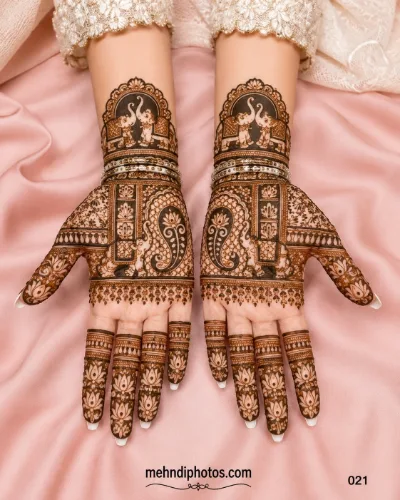
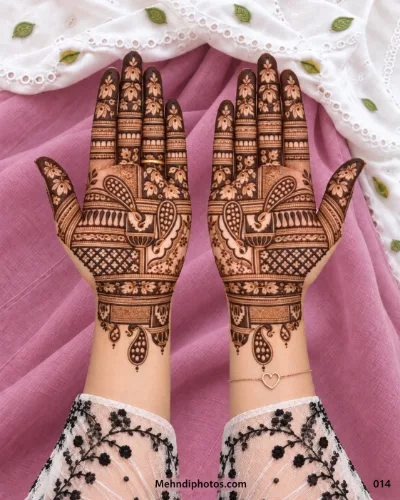
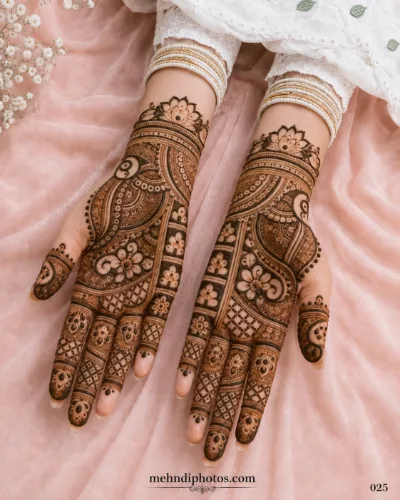
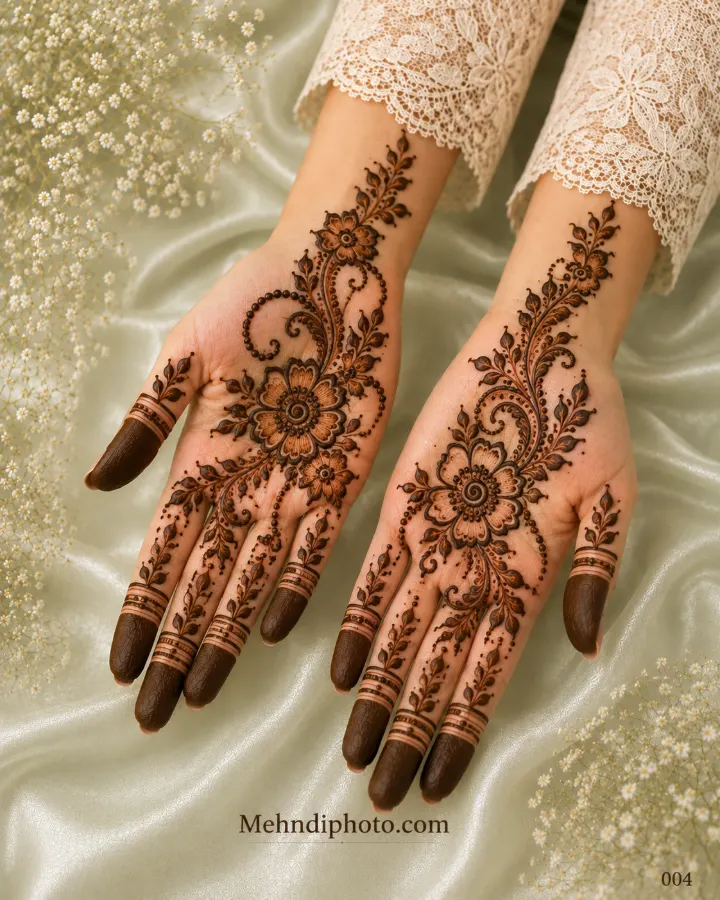
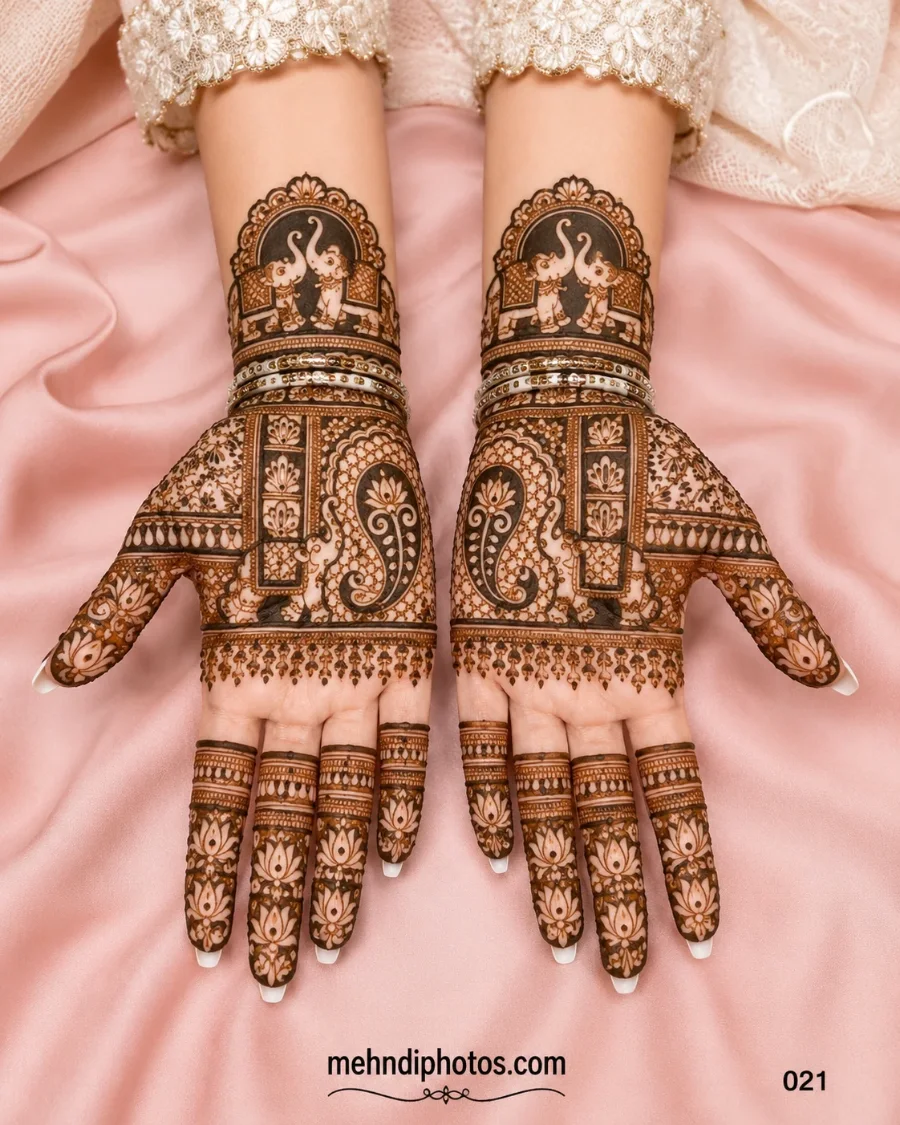
Perfectly mirrored mehndi looks impressive in photographs, but exact duplication is not the only way to make two hands feel like a pair. Hands are not identical, artists change angle as they work, and tiny differences are part of handmade henna. The more useful goal is visual coordination.
Match the big structure first
Before worrying about individual dots, align the major zones. Keep the wrist border at roughly the same height, use a similar central motif size, and decide how many fingers will be heavily decorated. If those large decisions match, small internal differences rarely feel distracting.
Use the same motif family
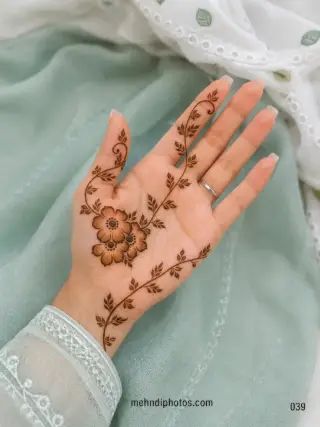
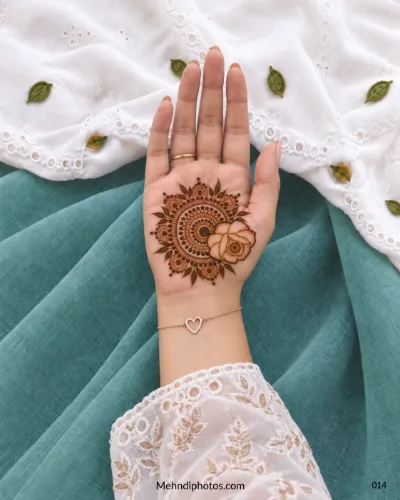
One hand can use a large flower and the other a related flower with slightly different petals. Both can share lotus shapes, paisleys, leaves or geometric bands without repeating every line. This approach is especially useful when you want coordinated but not cloned hands.
Keep visual weight balanced
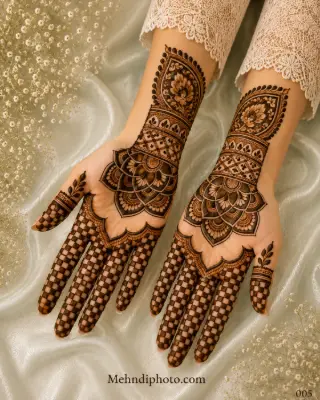
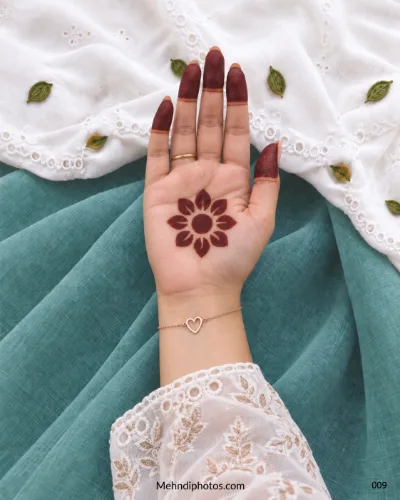
If the left palm has a dense central motif and heavily filled fingers, a very open right hand may look unrelated. You can vary the details while keeping a similar amount of dark and open area on each side.
Finger patterns can coordinate rather than copy
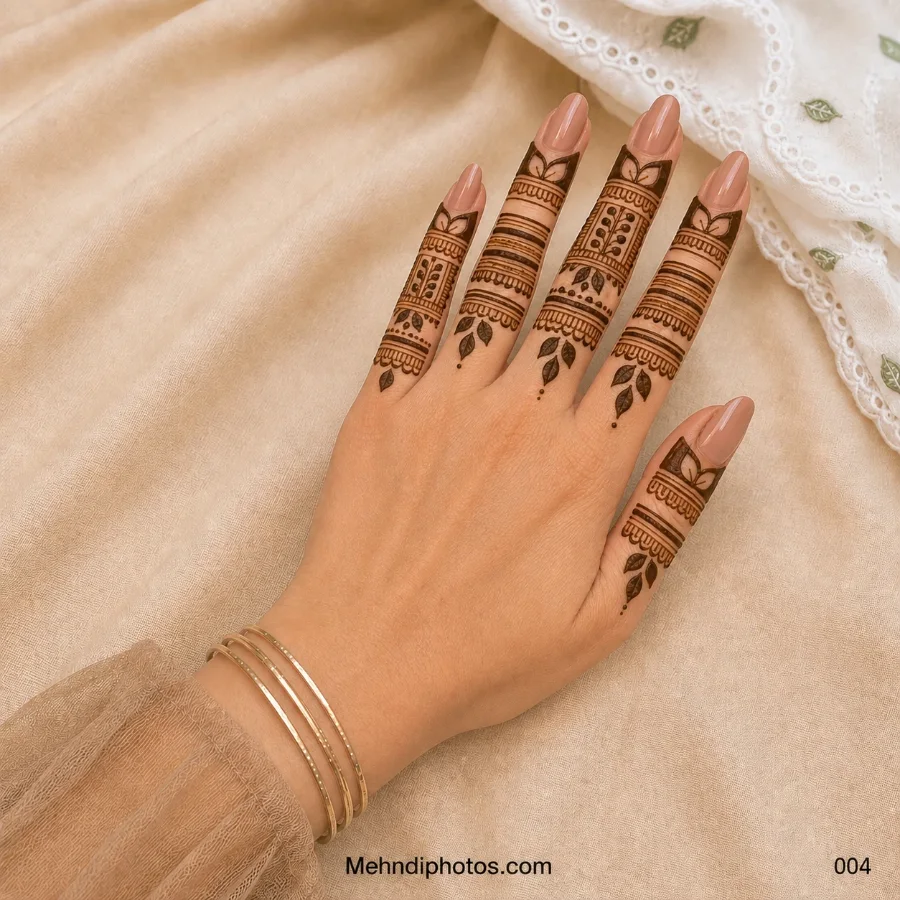
Use the same band height or fingertip treatment on both hands, then vary the filling inside each band. Browse Finger Mehndi to compare ways repeated structures can hold different internal patterns.
Photograph both hands together during planning
If you are combining two reference images, place them side by side on your phone. Squint slightly or zoom out. Do they have similar density and direction? This quick test reveals mismatches that are easy to miss when viewing each reference separately.
Bridal symmetry needs planning time
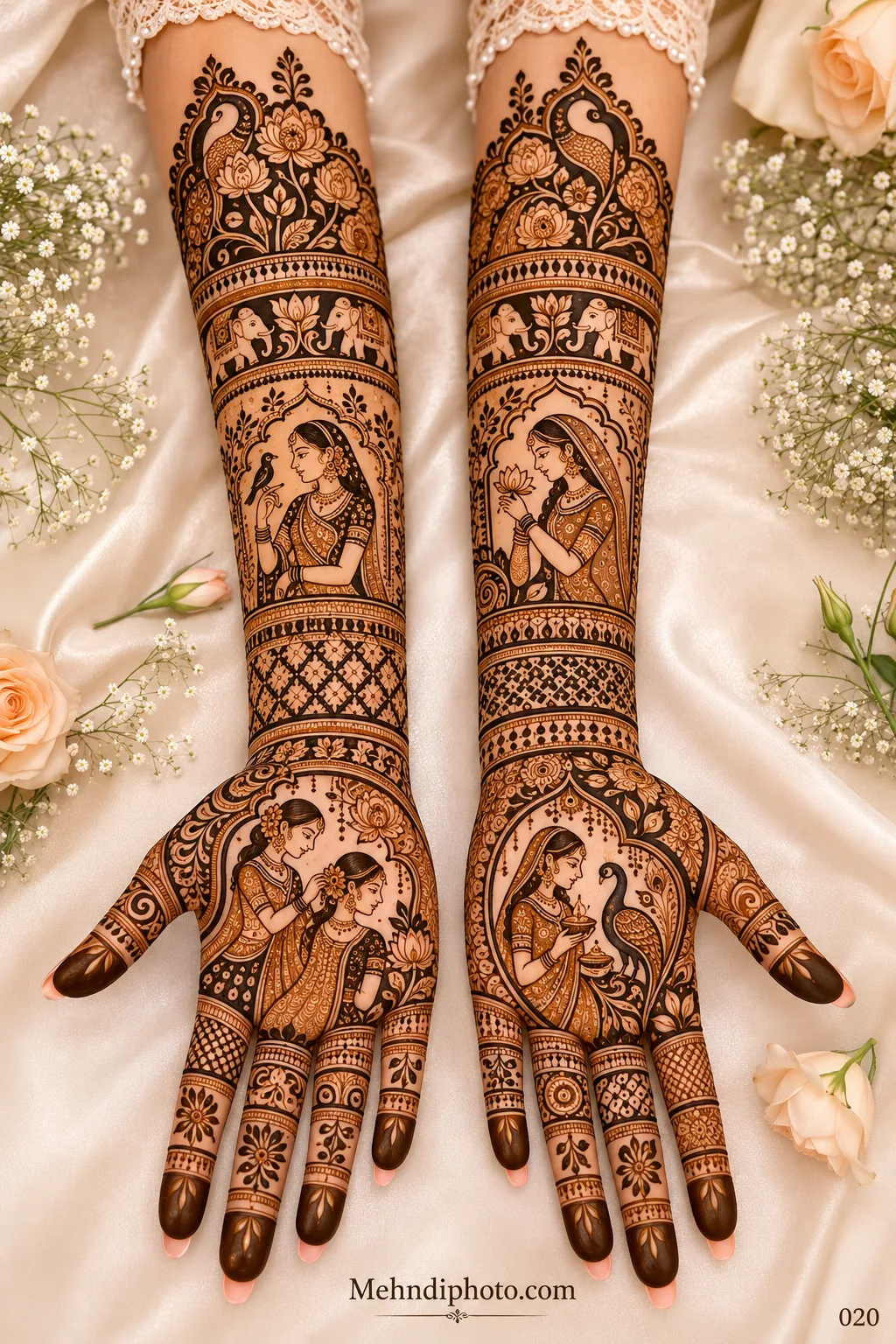
For detailed Bridal Mehndi, tell the artist early if mirrored hands are important to you. Portraits, names and storytelling panels need to be positioned before surrounding filler is added. Last-minute symmetry is much harder to create.
Do not “fix” tiny differences by overfilling
A flower that is a few millimetres larger on one hand usually looks natural. Adding extra dots and leaves around the smaller flower can create a darker patch that attracts more attention than the original difference.
Final thought
Symmetry is a tool, not a quality test. Two hands feel connected when they share rhythm, scale and visual weight. Let the small details remain handmade; that variation is part of what separates mehndi from a printed pattern.
A simple two-hand planning exercise
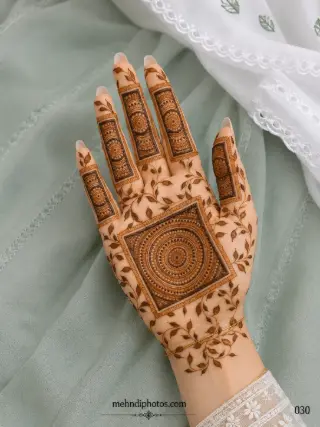
Choose one repeated element, such as a flower or paisley, and place it at a similar distance from the wrist on each hand. Keep the overall coverage balanced while allowing the small leaves and dots to vary. Browse our Front Hand Mehndi designs for placement inspiration and Bridal Mehndi designs for denser paired-hand arrangements. Practice the main shapes on paper before applying henna to skin.