Minimal Mehndi Designs: Elegant Ideas with Less Coverage
Minimal mehndi is about deliberate placement, clean lines and open skin rather than simply using fewer strokes. This guide covers modern motifs, jewellery-friendly layouts and easy ways to make a light design feel finished.

Minimal mehndi is often described as simple, but the best minimal designs are not unfinished versions of larger patterns. They are carefully edited compositions where every line has a purpose. Open skin is part of the design, not an empty area waiting to be filled. This style works especially well for people who want henna that feels modern, photographs cleanly and leaves room for rings, bracelets or detailed clothing.
What makes mehndi look minimal?
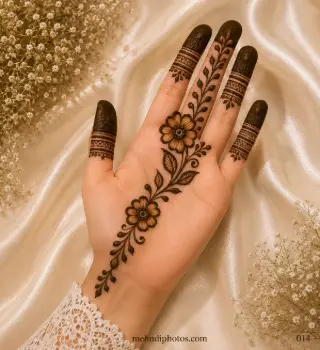
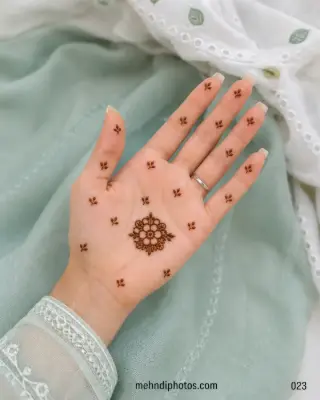
Minimal mehndi usually relies on one or two focal elements rather than many small fillers. You might see a single flower with a vine, two thin finger bands, a bracelet-style wrist motif or a tiny mandala placed slightly off-centre. The spacing matters more than the number of motifs. If every gap is filled with dots or leaves, a design can stop feeling minimal even if the total coverage is small.
Minimal front hand mehndi
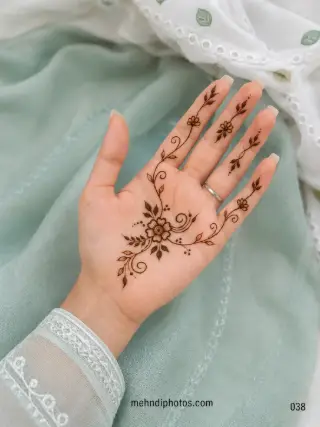
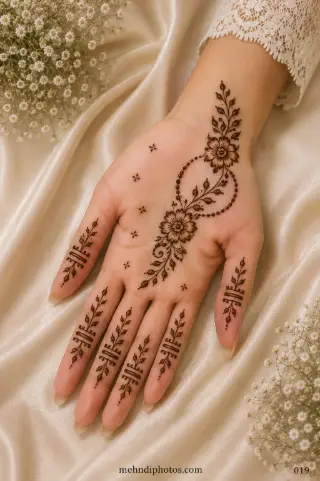
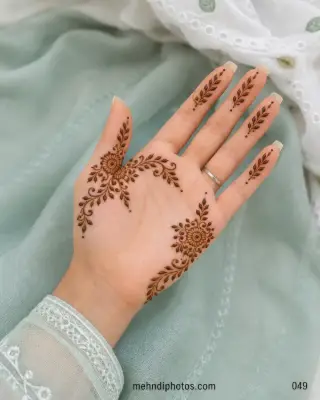
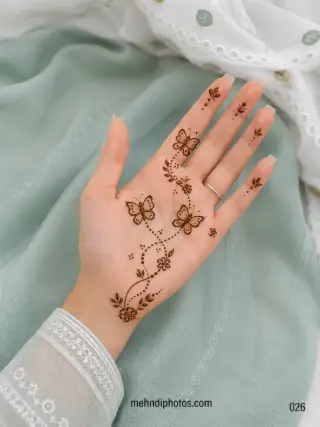
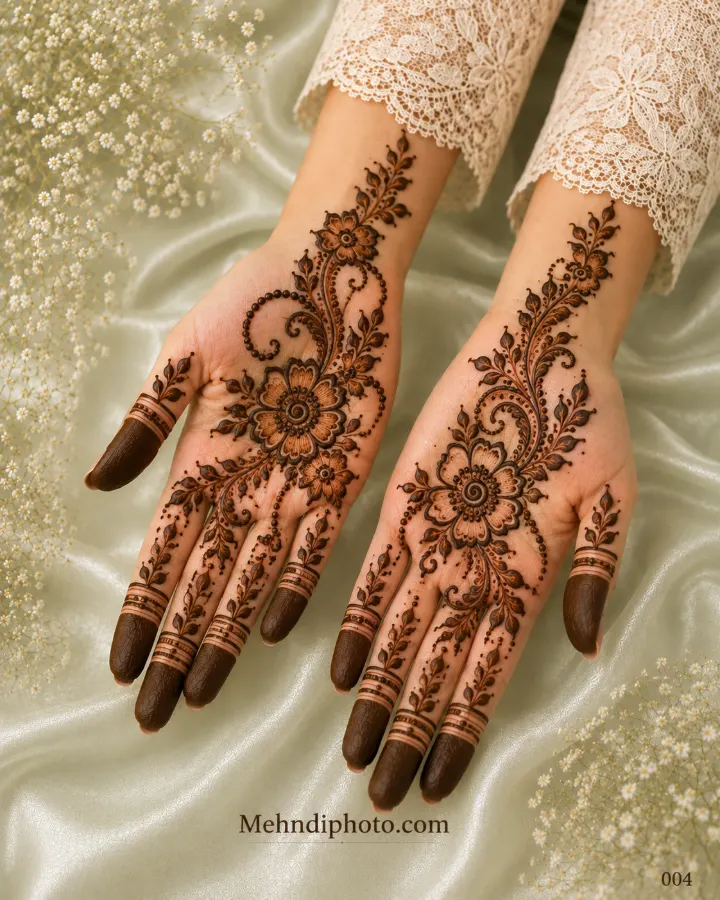
On the palm, try one central motif or a diagonal trail rather than covering the whole surface. A small flower near the base of the thumb, a loose vine toward the index finger or a clean round tikki can give the hand a finished look without heavy detail. Browse front hand mehndi designs and focus on references with clear negative space. You can often simplify a fuller pattern by keeping only its strongest motif and one connecting element.
Minimal back hand mehndi
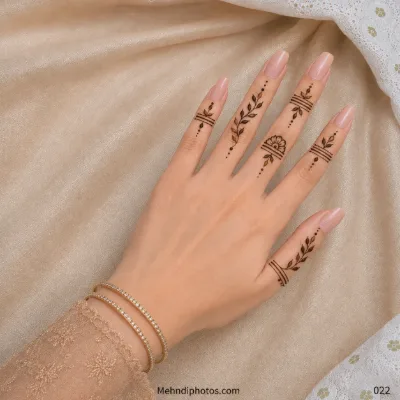
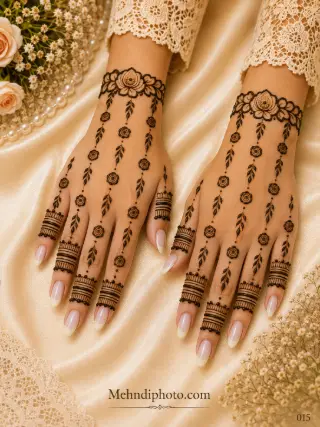
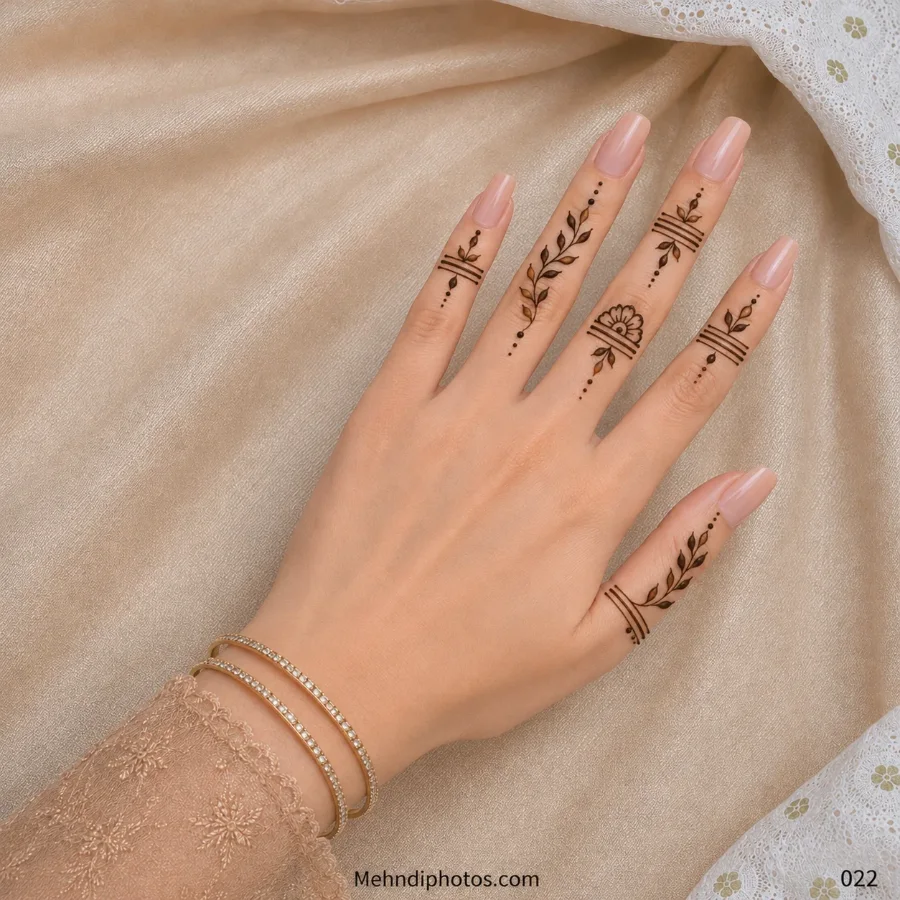
The back hand is naturally suited to minimal work because jewellery often becomes part of the composition. Ring-chain patterns, leafy finger bands, thin wrist cuffs and small florals below the knuckles are popular because they leave the centre of the hand open. If you wear a statement ring, position the mehndi around it rather than underneath it. The back hand gallery can help you compare bracelet, vine and finger-focused layouts.
Finger-only minimal designs
Finger mehndi is one of the fastest ways to create a modern look. The fingers do not need to match exactly. One can use a leafy trail, another can have a thin band, and a third can remain mostly open. Coordinated variation often looks more natural than identical repeated panels. Use the finger mehndi collection to see how small motifs can create enough detail without extending across the full hand.
Jewellery-inspired minimal mehndi
Bracelet lines, ring chains and small hanging elements are useful when you want the henna to resemble an accessory. Keep the lines thin and the spacing clear so the design does not become visually heavy. This works well for engagements and wedding guests because it can sit beside real jewellery instead of competing with it. Leave a small gap between the mehndi and a watch or bracelet so both remain visible.
Floral and leafy minimal patterns
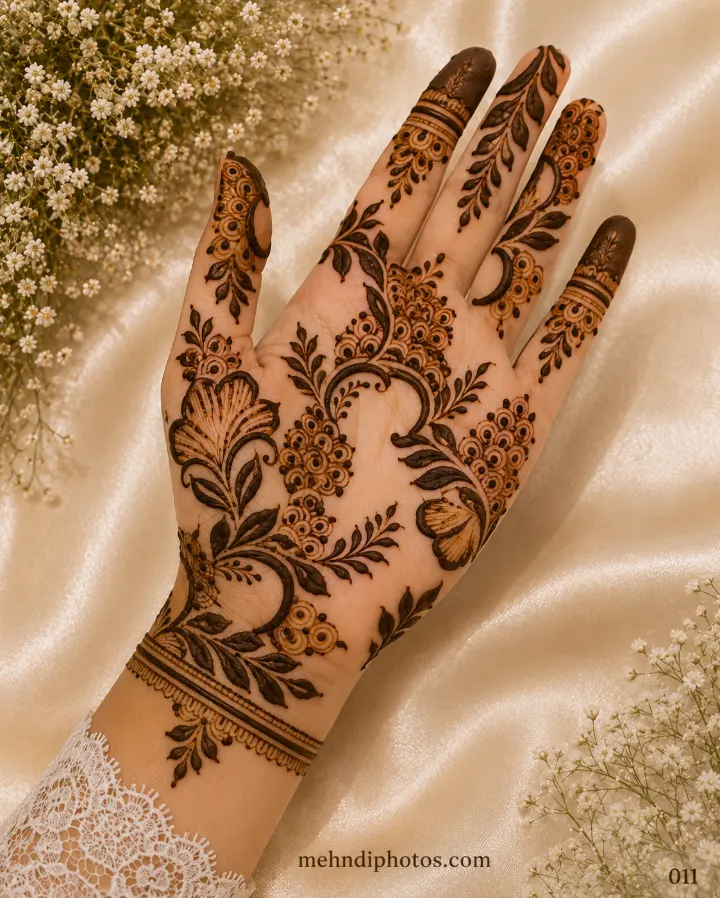
Flowers and leaves are forgiving because they can be scaled up or down easily. One medium flower with three or four leaves can fill a small area more gracefully than dozens of tiny petals. A curved vine also adapts naturally to different hand shapes. For a softer look, use rounded petals and open leaves. For something sharper and more graphic, use pointed leaves, clean borders and small dot clusters.
When minimal mehndi works best
Minimal designs are ideal for college events, office celebrations, intimate weddings, engagement parties, Eid visits, Diwali evenings and occasions where you need something quick. They are also practical when you want to use your hands soon after application because less area is covered with wet paste. For formal bridal events, minimal mehndi can still work if that matches your personal style; make the focal motifs more refined rather than adding coverage simply because the event is large.
Common mistakes
The most common mistake is adding detail because the design feels too empty. Step back and look at the whole hand before filling a gap. Another mistake is using very tiny motifs; small work demands more precision and can look messy if line thickness is inconsistent. A minimal design also needs a clear ending. Finish a vine with a leaf cluster, stop a wrist motif with a border, or keep finger bands at deliberate heights.
Final thoughts
Minimal mehndi works when placement feels intentional. Choose one focal area, use clean spacing and resist the urge to fill every empty patch. A few confident lines can create more impact than a crowded pattern. Browse minimal mehndi ideas and save references that match the jewellery and outfit you plan to wear.