Moroccan Mehndi Designs: Geometric & Modern Henna Ideas
Moroccan mehndi stands apart for its geometric lines, diamonds, grids and structured negative space. This guide explains hand placement, symmetry, modern styling and how to combine sharp patterns with softer details.

Moroccan mehndi has a noticeably different rhythm from floral Indian or Arabic designs. Instead of relying mainly on paisleys and flowing vines, it often uses diamonds, triangles, grids, chevrons, straight lines and repeated geometric borders. The result can feel graphic, modern and architectural.
That structure makes Moroccan mehndi striking, but it also means uneven spacing is easier to notice. A simple geometric design can require more line control than a loose floral pattern. Choose a reference based on your artist’s comfort with straight lines and repeated shapes, not only on how minimal it looks.
Core Moroccan mehndi elements
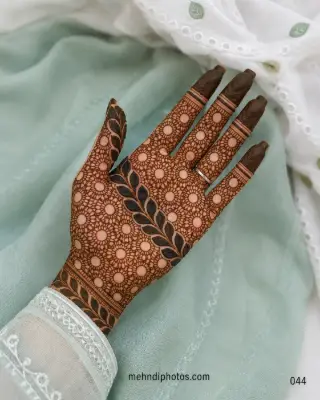
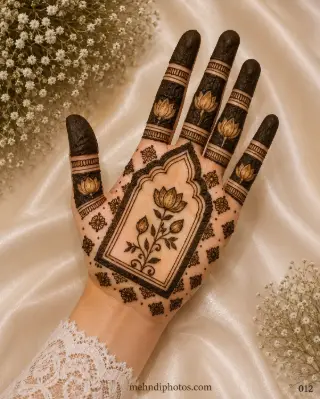
Diamonds, lattice grids, zigzags and narrow patterned bands are common building blocks. They can be used as one bold panel or repeated across fingers and wrist sections. Leaving open skin between panels is important because it keeps the geometry readable and prevents the hand from looking like one continuous block.
Geometric back hand mehndi
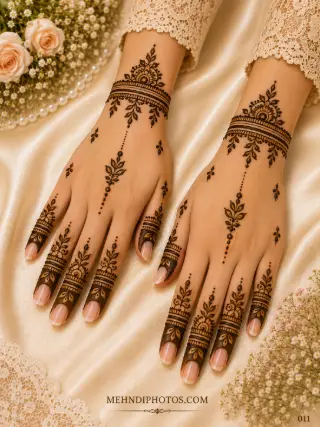
The back of the hand works especially well for structured patterns. A central diamond or narrow vertical panel can run toward the middle finger, with lighter bands on the surrounding fingers. This placement keeps the geometry visible when the hand is relaxed and leaves room for rings. Browse back hand mehndi designs to compare open and dense layouts.
Moroccan finger mehndi
Fingers can carry thin bands, tiny chevrons, stacked diamonds or alternating filled and open sections. Identical patterns on every finger are not necessary. A coordinated set with two stronger fingers and three lighter ones can feel more modern and reduces the pressure of repeating tiny geometry perfectly.
Front hand geometric designs
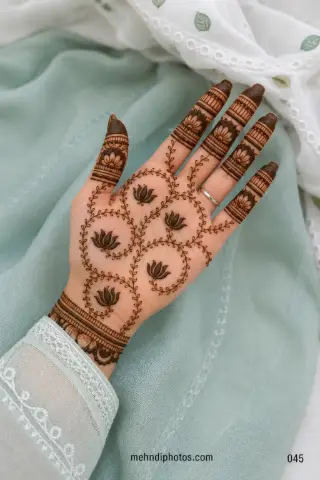
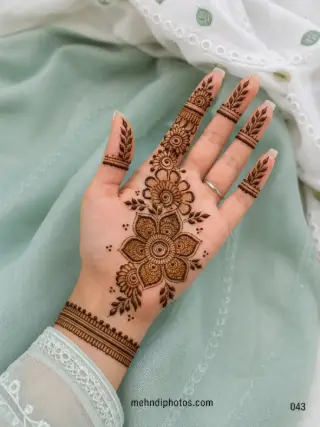
On the palm, a full grid can feel heavy. Instead, consider a central diamond, a vertical panel or a broad geometric band that crosses the palm. These shapes can connect to a wrist cuff without covering the entire hand. For broader placement ideas, see front hand mehndi.
Mixing geometry with florals
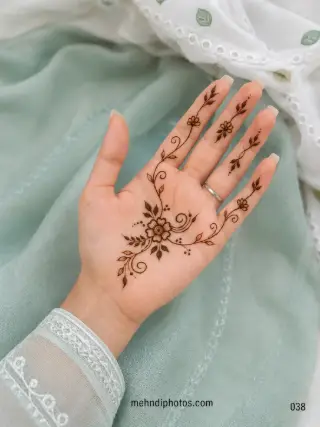
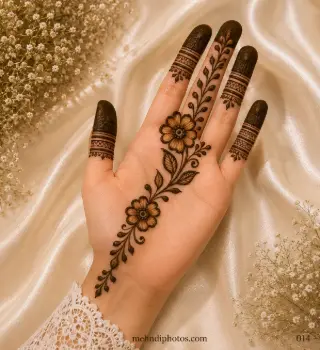
Moroccan-inspired designs do not have to be completely geometric. A small flower or leafy border can soften a strict grid, while a geometric cuff can give structure to a flowing floral trail. Keep one visual language dominant. If the centre is strongly geometric, use only a few organic elements around the edges.
Negative space matters
Open skin is especially important in geometric mehndi because it separates repeated shapes. A narrow blank line between two patterned panels can make both easier to see. Filling every gap with dots often weakens the crisp, modern quality that draws people to Moroccan designs in the first place.
Simple Moroccan mehndi
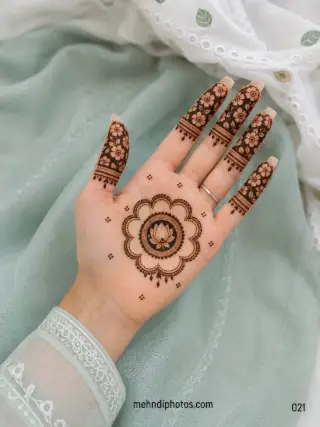
A simple design might use three stacked diamonds on one finger, a small grid at the wrist and a thin connecting line. Another option is one decorative cuff with completely open fingers. These layouts apply relatively quickly, but clean edges still matter more than motif count.
When to choose Moroccan mehndi
Geometric patterns work well for modern weddings, fashion-focused events, Eid gatherings and anyone who prefers sharp lines over traditional florals. They also pair nicely with outfits that already contain geometric embroidery because the design can echo those shapes without copying them exactly.
Final thoughts
Moroccan mehndi is about rhythm, spacing and confident lines. Choose a few geometric elements and repeat them with purpose rather than trying to fit every pattern into one hand. Browse Moroccan mehndi ideas and compare finger, wrist and full-hand layouts before deciding how much geometry suits your style.