Pakistani Mehndi Designs: Bridal, Simple & Arabic Fusion
Pakistani mehndi often blends fine traditional detail with flowing floral and Arabic-inspired elements. This guide covers bridal layouts, back-hand patterns, jaali, florals, finger styling and ways to choose a balanced design.

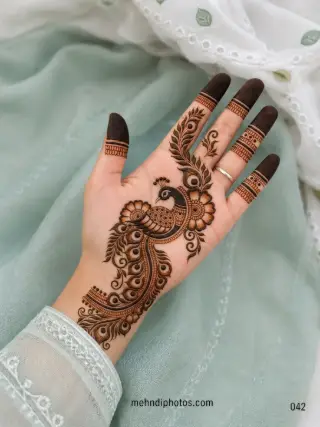
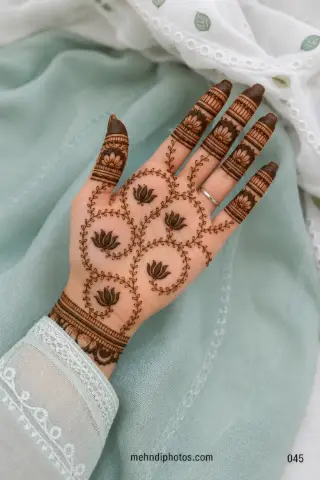
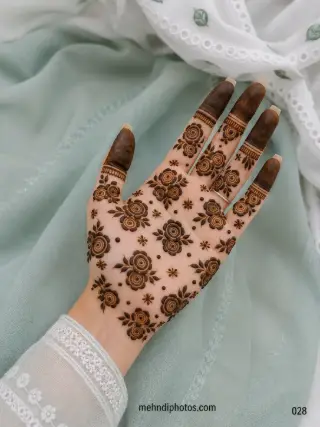
Pakistani mehndi is known for its ability to combine detailed traditional work with the movement and open spacing often associated with Arabic patterns. Some designs are dense and highly ornamental, while others use bold flowers, wrist cuffs and clean back-hand trails. The result is a style that can feel formal without always covering every inch of skin.
When choosing a Pakistani mehndi reference, look beyond the label and notice the structure. Is the design built around jaali and fine fillers, or around large flowers and diagonal movement? That will tell you more about the application time and final look than the category name alone.
Pakistani bridal mehndi
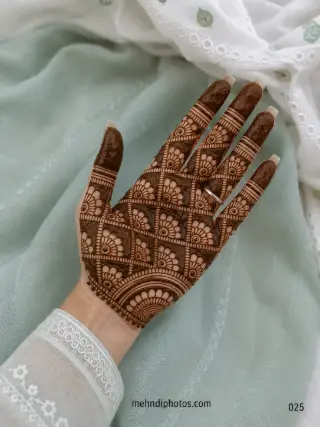
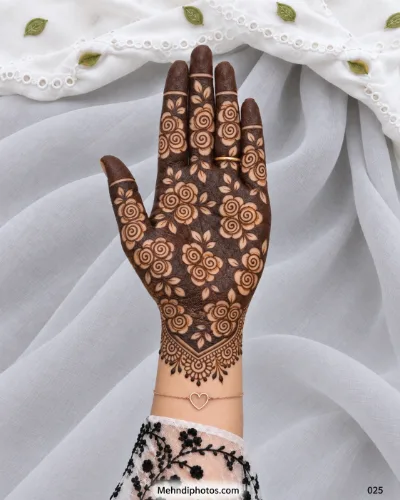
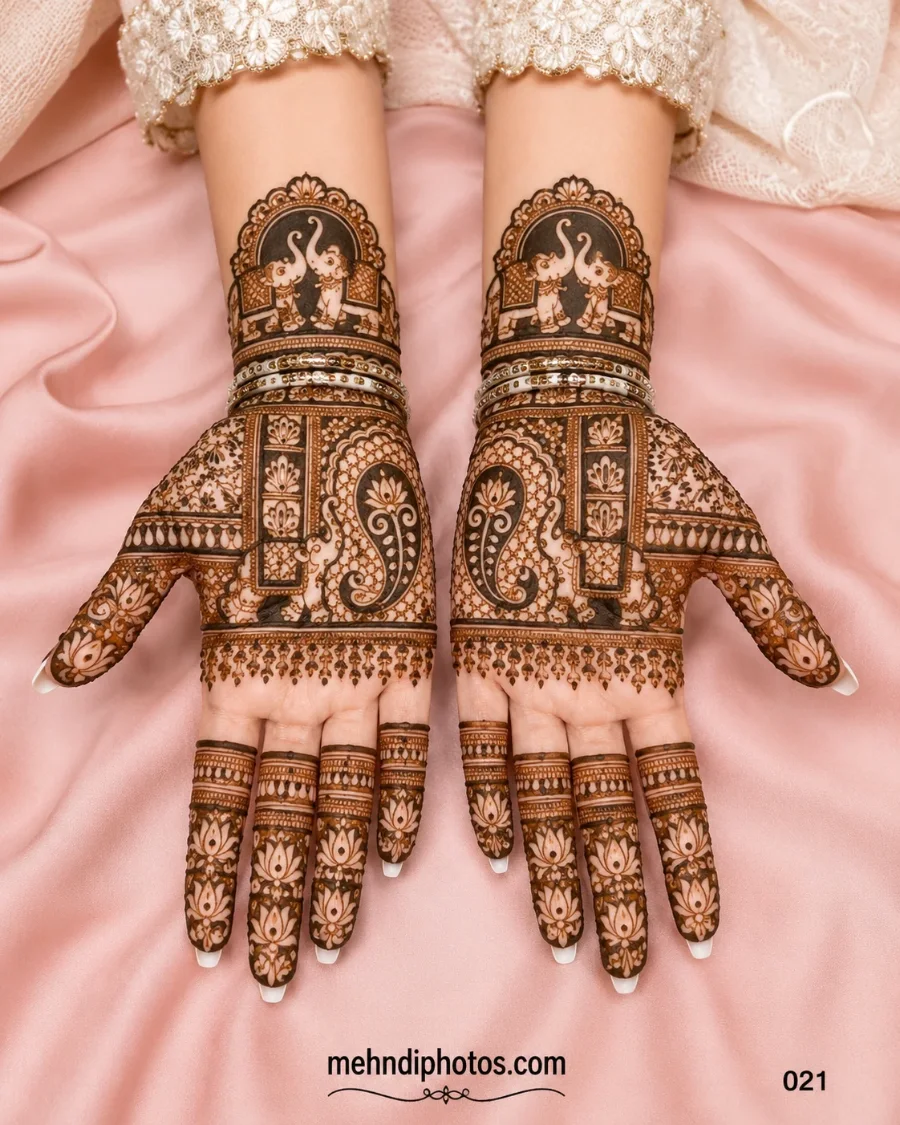
Bridal designs can include detailed palms, decorative forearm panels, florals, paisleys and carefully patterned fingers. The coverage is often rich, but strong designs still keep larger motifs visible. If every section uses equally tiny detail, the hand can lose visual hierarchy. Compare with the bridal mehndi collection to see how full coverage can be broken into readable sections.
Arabic influence in Pakistani mehndi
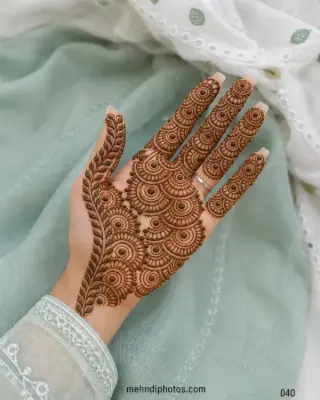
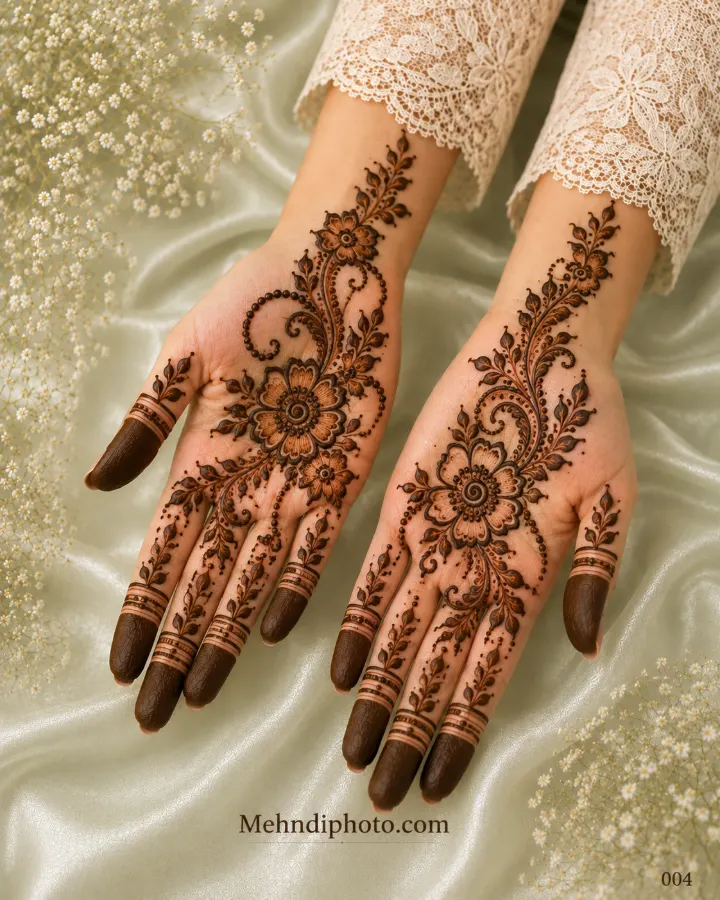
Large flowers, shaded petals, leafy vines and diagonal trails are often used to create movement. These elements can soften dense traditional panels and introduce more negative space. If you prefer the flowing side of the style, browse Arabic mehndi designs and look for references that combine bold motifs with fine internal detail.
Back hand Pakistani designs
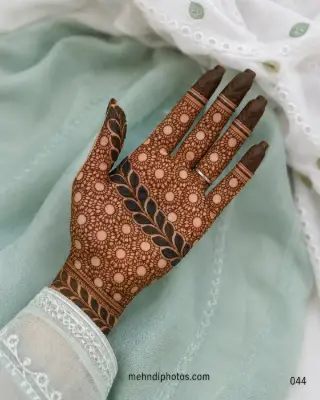
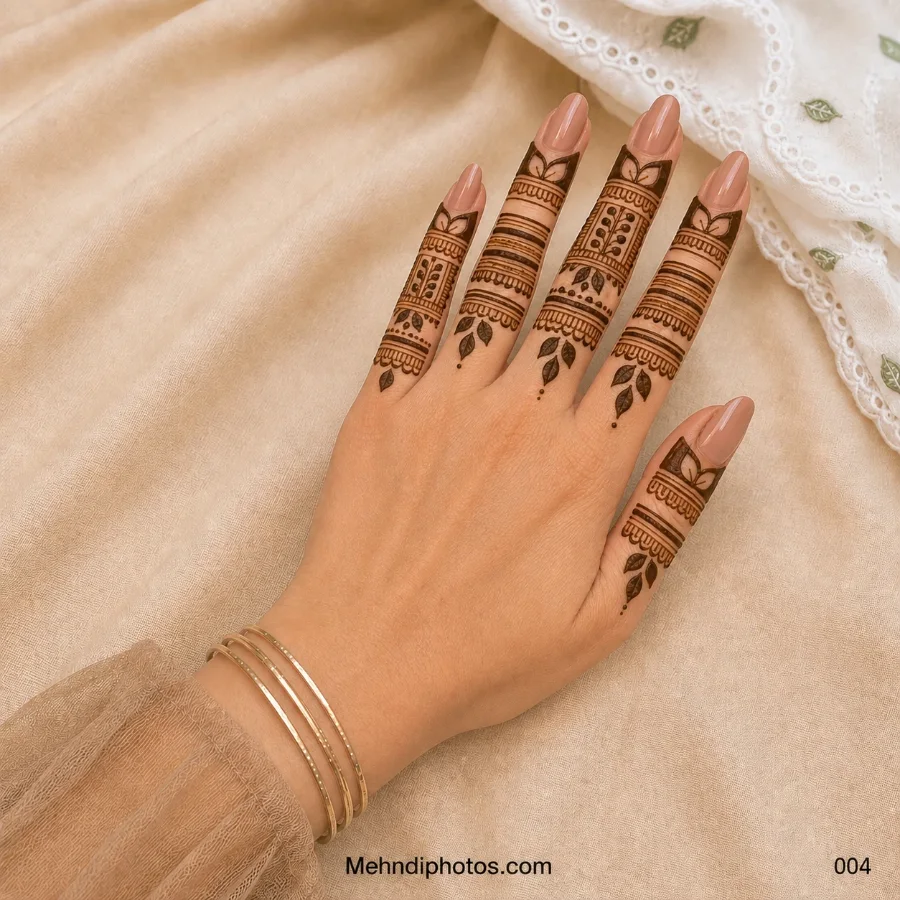
The back hand is ideal for bracelet cuffs, ring-chain patterns and floral trails. A common balanced layout places a stronger wrist section at the bottom and lighter motifs toward the fingers. This makes the design visible in photos without hiding jewellery. The back hand gallery is useful for studying how much open skin different patterns leave.
Jaali and lattice patterns
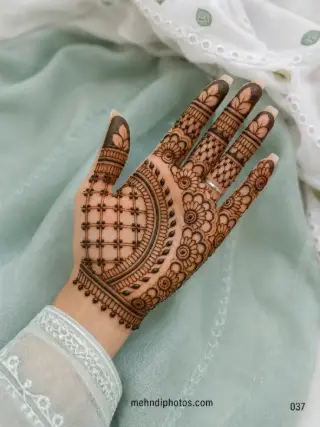
Jaali can fill the wrist, back hand or forearm while keeping the design organised. The key is consistency. Uneven grid spacing becomes noticeable quickly, so the artist should keep these sections compact and use floral borders to transition into freer motifs. Small dots or leaves at the intersections can add detail without making the net too heavy.
Finger styling
Pakistani finger mehndi can range from fine full-finger panels to simple bands. If the palm or back-hand section is very detailed, lighter fingers can prevent the composition from feeling crowded. If the centre is open, more ornate fingers can provide the missing visual weight. Explore finger mehndi designs for band and panel ideas.
Simple Pakistani mehndi
A simple version can use one bold flower, a paisley and a short trail of leaves. Another option is a half-mandala near the wrist with two decorated fingers. The style does not depend on full coverage; it depends on how traditional and flowing elements are combined.
Choosing a design for Eid or weddings
For Eid, lighter back-hand florals and finger bands are practical because they apply quickly and pair well with bangles. For weddings, fuller palm and forearm work can feel more formal. Brides may choose dense detailing, while guests can keep the same motif language with much less coverage.
Final thoughts
Pakistani mehndi offers plenty of room between simple and elaborate. Decide first whether you prefer the detailed traditional side or the flowing floral side, then choose a reference that balances those elements. Browse Pakistani mehndi ideas and save examples that match your event, outfit and available application time.