Rose Mehndi Designs: Simple, Bridal & Back Hand Ideas
Rose mehndi can be soft and minimal or deeply detailed with shaded petals and floral trails. This guide covers rose sizes, front and back hand placement, bridal combinations, finger styling and ways to keep the flower readable.

Rose motifs can make mehndi feel romantic without requiring a full bridal layout. A single outlined rose works in a minimal back-hand design, while layered shaded roses can become the main feature of a dense wedding composition. The key is petal structure. If the centre and outer petals are not separated clearly, a rose can turn into an undefined dark circle after the stain develops.
Simple rose mehndi designs
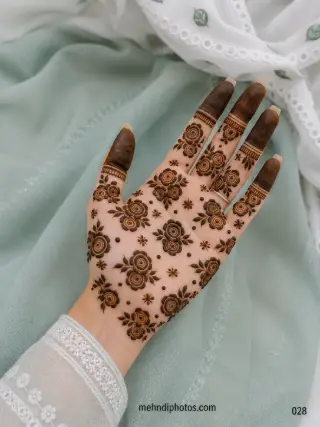
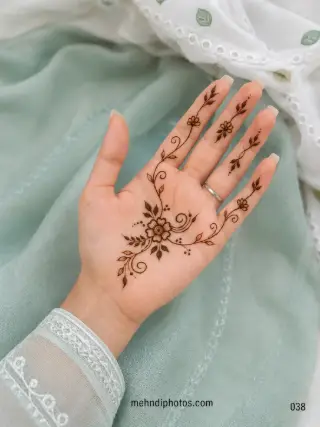
For a light design, use one medium rose with a short leafy trail. Keep the flower large enough that the petals remain visible. A small cluster near the wrist or below the knuckles can look complete with only a few dots or leaves around it. Avoid adding too many tiny petals simply to make the rose look realistic.
Back hand rose mehndi
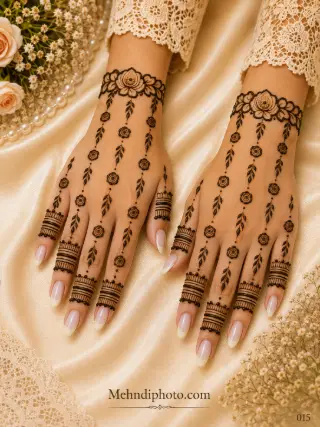
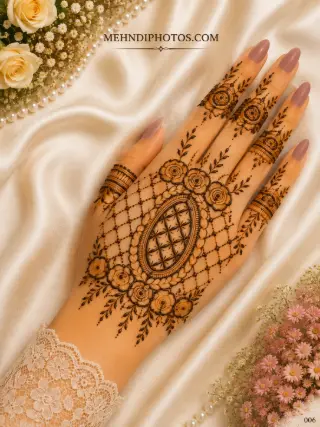
The back of the hand is a natural place for a rose because the motif can sit below the knuckles and connect to a finger with a thin vine. Another option is to place the rose closer to the wrist and leave the centre of the hand open for jewellery. Browse back hand mehndi designs for balanced negative-space layouts.
Front hand rose mehndi
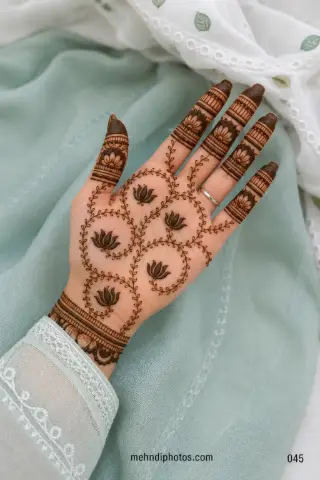
On the palm, a rose can replace a traditional mandala as the focal motif. Because the palm bends, do not make the flower so large that the outer petals disappear into the thumb crease. A medium rose with leafy extensions toward the fingers and wrist tends to adapt better to hand movement. Explore front hand mehndi for broader placement ideas.
Shaded rose mehndi
Shading can create depth, especially in Arabic-inspired designs. Use darker henna near the petal folds and leave small open spaces between layers. Too much solid fill can remove the rose effect. Bold outlines and lighter internal shading usually photograph better than a uniformly dark flower.
Rose and Arabic mehndi
Roses combine naturally with Arabic-style vines because both favour larger floral shapes and flowing movement. A diagonal trail of one rose, a few buds and bold leaves can cover the hand without dense filling. Browse Arabic mehndi designs for open floral compositions.
Bridal rose mehndi
For brides, roses can frame portraits, initials, jaali or paisley sections. Use one or two large roses as visual anchors instead of repeating the same flower across every part of the hand. Smaller buds can connect sections without competing with the main blooms. See bridal mehndi designs for full-hand balance.
Rose finger mehndi
A complete rose is usually too wide for most fingers, but small half-roses, buds and petal bands can work well. Another option is a leafy finger trail that visually connects to a larger rose on the back of the hand. Keep the finger motif simpler than the main flower so the composition remains focused.
Pairing roses with jewellery
If you are wearing rings, place the rose slightly away from the ring finger or use the flower at the wrist. A large rose directly under a statement ring can make both elements harder to see. For engagement events, open skin around the ring is especially useful in close-up photographs.
Final thoughts
Rose mehndi is strongest when the flower keeps its shape after the design becomes dark. Use a clear centre, distinct petal layers and enough open space around the bloom. Browse rose mehndi ideas and compare outlined, shaded and bridal versions before choosing the amount of detail that suits your hand.