Wedding Mehndi Designs: Bridal, Guest & Family Function Ideas
Wedding mehndi can mean full bridal coverage, elegant engagement-style hands or a quick design for guests. This guide helps you choose the right style, coverage and placement for every wedding function.
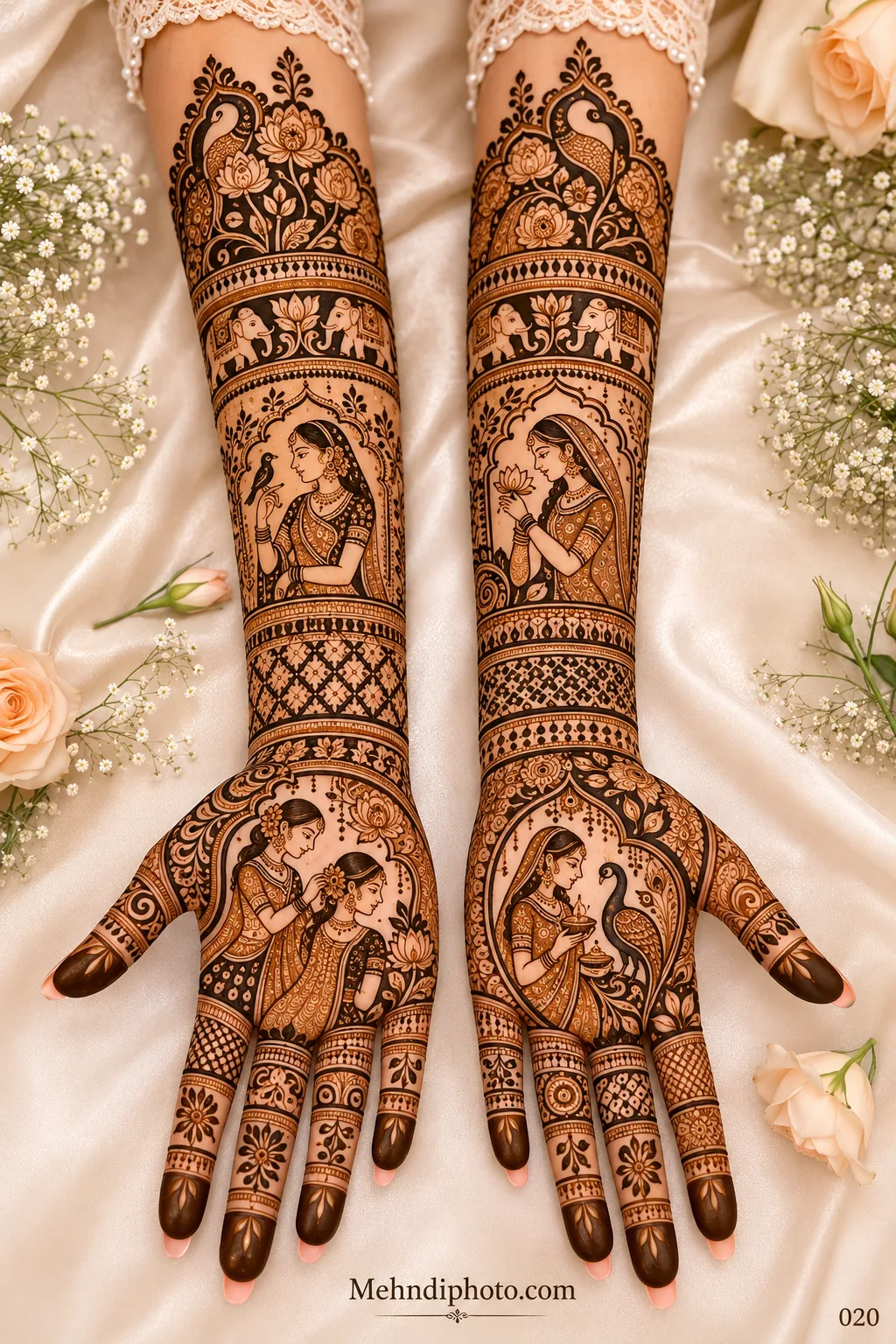
Wedding mehndi is not one single style. A bride may want detailed designs from fingertips to forearms, while her sister might prefer a clean back-hand pattern that takes less time. A wedding guest may only want a few floral bands before the sangeet. The best design depends on your role, outfit, jewellery, function and the amount of time you have.
This guide brings those choices together so you can find a wedding mehndi design that looks beautiful in real life and still works practically through a busy celebration.
Start with the wedding function, not the trend
A design that suits the main wedding day may feel too heavy for a haldi or cocktail function. Before choosing a reference, decide when you will wear the mehndi and how long you need it to remain the visual focus.
For the bride
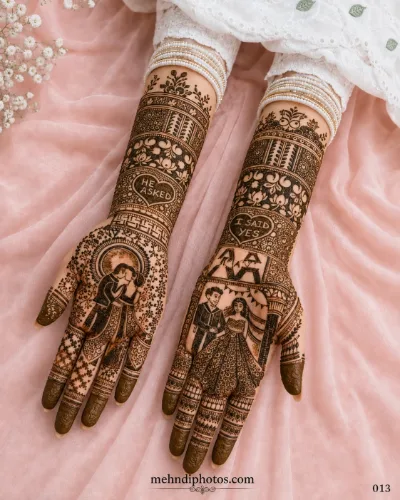
Bridal mehndi can carry the richest detail because it is part of the complete wedding look. Full-hand florals, jaali, paisleys, peacocks, architectural motifs, bride-and-groom figures and personalised initials all work well when the composition is planned carefully.
Browse our Bridal Mehndi Designs if you want dense traditional references and full-arm ideas.
For engagement and ring ceremony
Engagement mehndi often looks better with slightly more open space, especially around the ring finger and back of the hand. This keeps jewellery visible in close-up photographs. Floral trails, bracelet-style bands and symmetrical finger details are useful choices.
See the Engagement Mehndi collection for ring-friendly ideas.
For bridesmaids and sisters
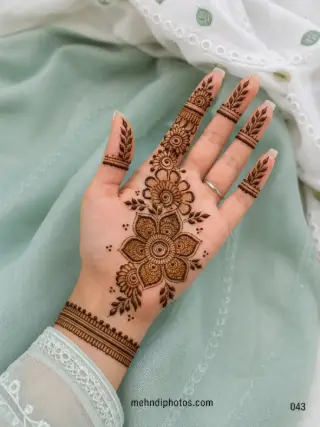
Medium coverage is usually the sweet spot. You can use one strong palm motif, detailed fingers and a neat wrist finish without committing to full bridal density.
For wedding guests
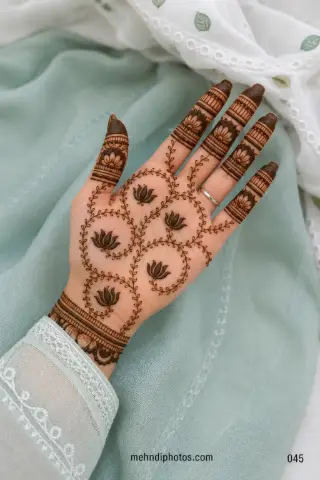
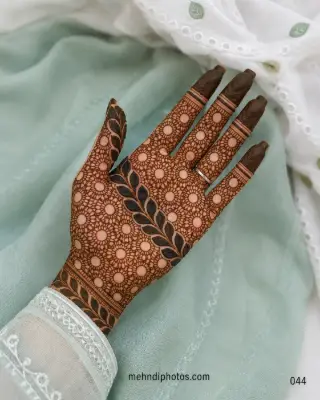
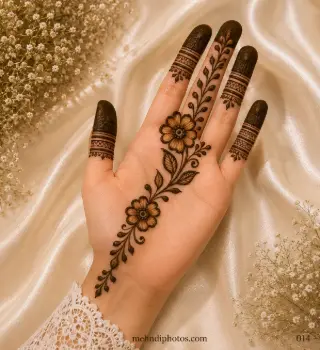
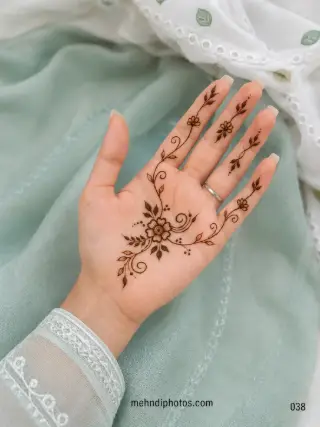
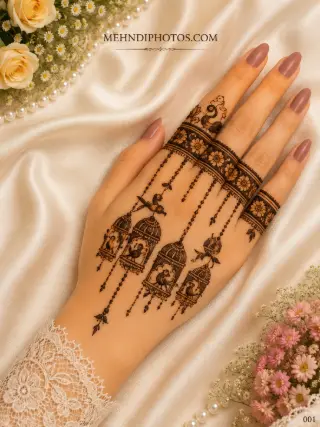
Simple front-hand flowers, Arabic vines, back-hand jewellery patterns and finger mehndi are practical because they are faster to apply and easier to maintain through travel and functions.
Popular wedding mehndi styles
Traditional Indian bridal mehndi
Traditional designs use layered florals, paisleys, jaali sections, peacocks, mandalas and repeated borders. They suit heavily embroidered lehengas and classic bridal jewellery particularly well.
Arabic and Indo-Arabic wedding mehndi
Arabic mehndi uses large flowers, leafy vines and generous negative space. Indo-Arabic designs combine this open flow with Indian jaali, paisleys or mandalas. They are useful when you want a rich look without filling every part of the hand.
Explore Arabic Mehndi Designs for more flowing references.
Minimal wedding mehndi
Minimal does not have to look casual. A centred mandala, fine finger bands, one floral wrist cuff or a clean diagonal vine can look polished when the spacing is intentional.
Personalised wedding mehndi
Initials, dates, tiny symbols, wedding scenes and meaningful motifs can make bridal mehndi feel personal. The best personalised details are worked into the pattern rather than placed randomly in an empty area.
Front hand or back hand: where should the detail go?
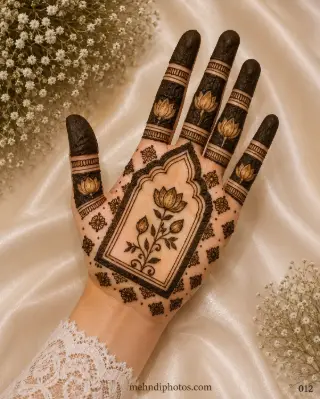
The palm is ideal for mandalas, portraits, large paisleys and storytelling motifs. The back of the hand works beautifully with jewellery-inspired chains, floral trails, cuffs and finger bands.
If photographs are important, plan both sides together. A detailed palm and completely unrelated back-hand pattern can make the overall look feel disconnected. Use at least one repeated element—such as a flower shape, border or jaali style—to tie them together.
Compare Front Hand Mehndi and Back Hand Mehndi before choosing your final layout.
How much coverage is right?
- Light coverage: fingers, one palm motif or a back-hand trail.
- Medium coverage: palm plus wrist, detailed fingers and a partial forearm design.
- Full coverage: dense patterns from fingertips through the forearms, usually for brides.
More coverage is not automatically more beautiful. Clean spacing, confident lines and a clear composition matter more than filling every inch.
Wedding mehndi ideas that photograph well
Close-up wedding photography rewards designs that have visible focal points. Large flowers, bold mandalas, neat wrist cuffs, contrasting filled and open sections, and organised finger patterns tend to remain readable in photographs.
If your outfit and jewellery are already very detailed, leaving some negative space can help the mehndi stand out rather than competing with everything around it.
Matching mehndi with jewellery
Think about bangles, haath phool, rings and kaleere before finalising the design. Dense mehndi directly under heavy jewellery can disappear in photos. Leaving strategic space around rings or using bracelet-like mehndi around the wrist can create better separation.
Wedding mehndi for feet
For brides, feet and ankle mehndi can complete the look. The design does not need to copy the hand exactly. Repeating one motif—such as lotus petals, paisleys or jaali—is enough to create continuity.
Browse Leg Mehndi Designs for foot, ankle and bridal lower-leg references.
Planning your mehndi appointment
- Choose your reference and coverage before the appointment.
- Wear sleeves and clothing that will not rub against fresh henna.
- Finish waxing, shaving and manicure work beforehand.
- Keep enough uninterrupted time for detailed bridal work.
- Plan jewellery and outfit changes so fresh mehndi is not smudged.
Common wedding mehndi mistakes
One common mistake is choosing a design only because it looks impressive in a tightly cropped social-media photo. Check how it looks across the full hand and arm. Another is mixing too many styles—large Arabic flowers, tiny bridal jaali, geometric grids and portraits can all compete if there is no visual hierarchy.
Also avoid choosing coverage that does not suit your schedule. A rushed full-hand design usually looks less polished than a well-finished medium-coverage design.
Final thoughts
The best wedding mehndi is the one that fits the person wearing it. Brides can go rich and personalised; sisters and bridesmaids can choose medium coverage; guests can keep things light and elegant. Start with your function, outfit and jewellery, then choose the style.
Use the galleries on MehndiPhotos to compare real layouts before saving your final reference. A few carefully chosen examples are more useful to your artist than a folder containing dozens of unrelated designs.