Mehndi Mistakes Beginners Make & How to Fix Them
Beginner mehndi problems usually come from cone control, spacing, scale and overworking small mistakes rather than a lack of design ideas. This guide explains common errors and practical ways to recover without making the hand look crowded.

Most beginner mehndi mistakes are not dramatic. A line bends, one flower is larger than the other, a finger band sits slightly higher, or the cone suddenly releases too much paste. The problem usually becomes more visible when the artist panics and adds extra detail to hide it.
A better approach is to understand which mistakes can be absorbed into the design and which ones should simply be left alone. Henna is handmade; small variation is normal. Clean recovery usually looks better than aggressive correction.
Making every motif too small
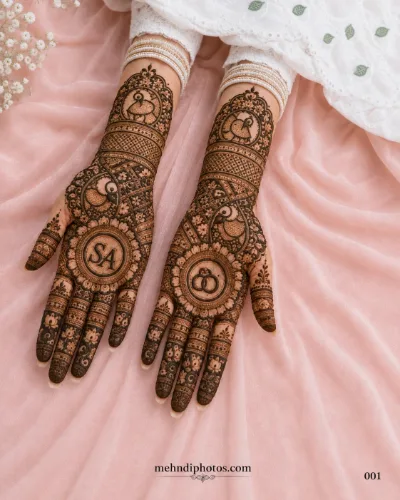
Beginners often draw tiny flowers and leaves because short strokes feel safer. In reality, very small work demands more control. Start with larger motifs and fewer of them. A medium flower with six clear petals is easier to manage than three miniature flowers with fine shading.
Starting without checking cone flow
A blocked or overly wide tip can ruin the first section of a design. Before touching the hand, draw a few curves and dots on a practice surface. Check whether the paste flows evenly and whether the line thickness matches the reference. This takes less than a minute and prevents many avoidable problems.
Filling every empty space
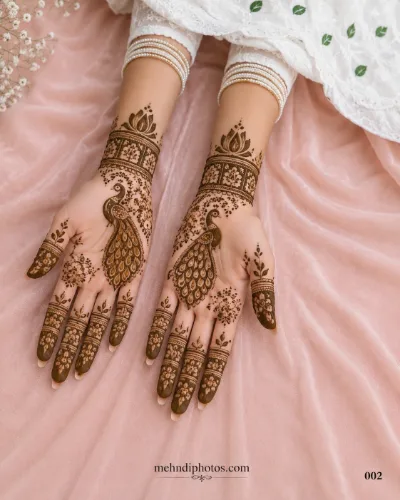
Empty skin is part of the composition. When beginners see a gap, they often add dots, leaves or checks until the design becomes crowded. Step back before filling anything. If the hand already feels balanced from a normal viewing distance, leave the gap alone.
Trying to make both hands perfectly identical
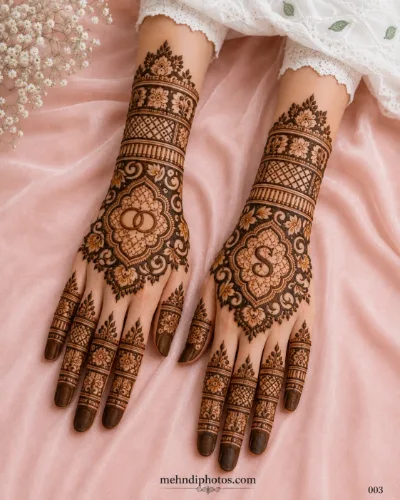
Exact duplication is difficult even for experienced artists because hands are not identical. Match the overall structure rather than every tiny detail. Use the same flower size, wrist height and finger coverage, but allow internal patterns to vary slightly. The result can still feel coordinated and natural.
Using too many line thicknesses accidentally
Intentional thick and thin lines add depth. Random changes look messy. If the line suddenly becomes thicker, check your pressure and hand speed. Practise long curves before working on a hand. Our mehndi cone control guide explains the basic grip and pressure techniques in more detail.
Choosing a design that is too difficult
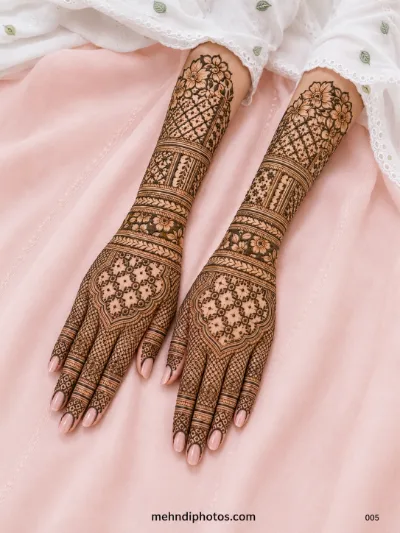
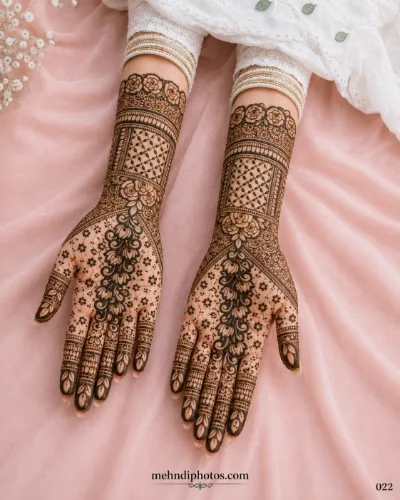
A reference can look simple because it has little coverage, but it may depend on perfect symmetry or very fine geometry. Judge difficulty by precision, not only by motif count. Loose vines, florals and paisleys are more forgiving than dense jaali or repeated straight-line panels.
Overcorrecting a bent line
If a curve bends slightly, do not surround it with five extra lines. Turn it into a leaf edge, thicken one section deliberately or continue the vine. Small asymmetry is often invisible once the full design is complete. Overworked correction attracts more attention than the original mistake.
Ignoring hand shape
A design copied exactly from a reference may not fit another hand. Shorter palms may need a smaller central motif, and narrow fingers may not have room for the same band pattern. Adapt the scale before starting instead of forcing every section into the available space.
Starting with complicated fingers
Finger work is narrow and repetitive, so small spacing problems become obvious. Start with the main palm or wrist motif and let the finger design support it. Once the central composition is balanced, you can decide how much detail the fingers actually need. Browse finger mehndi designs for simple band structures.
Final thoughts
Improving mehndi is less about avoiding every mistake and more about learning which ones matter. Use larger shapes, test the cone, protect negative space and resist the urge to hide every imperfect line. A calm, slightly imperfect design usually looks better than a crowded hand full of corrections. For practice references, browse simple mehndi designs and choose one technique to improve at a time.